Condition
Waking up with a stiff, painful neck that is hard to turn.
We’re closed right now. WhatsApp us and we’ll reply when we open.

- Registered Chiropractor 註冊脊醫
- Doctor of Chiropractic D’Youville College, USA
- Whampoa & Hung Hom Near Whampoa MTR
Wry neck is a sudden stiff, painful neck that is hard to turn, usually noticed on waking. It is thought to come from a suddenly irritated joint or muscle in the neck, with protective muscle spasm. Wry neck is common and usually settles within a few days to two weeks, and gentle movement tends to help more than keeping still. A stiff neck with a fever, a severe headache or arm weakness is not ordinary wry neck and needs a doctor promptly.
Key points
- Wry neck usually starts on waking, and is linked to sleeping position or a sudden turn of the head.
- Most people recover within one to two weeks, and gentle movement helps more than keeping still.
- Heat, hands-on treatment and simple exercises may help ease pain and restore movement.
- A stiff neck with a fever, a severe headache, arm weakness or dizziness needs prompt medical care.
Wry neck, also called acute torticollis, is a sudden episode of neck pain and stiffness. You typically wake up unable to turn your head to one side, with the head held slightly tilted or turned away from the painful side. It can also start after a quick turn of the head.
The exact cause isn’t always clear. It is thought to start when a small facet joint at the side of the neck, or a muscle, becomes suddenly irritated, often after hours in an awkward position. Nearby muscles such as the levator scapulae and upper trapezius then tighten to protect the area, which causes much of the stiffness. As the irritation settles the muscles relax, which is why most episodes ease within days.
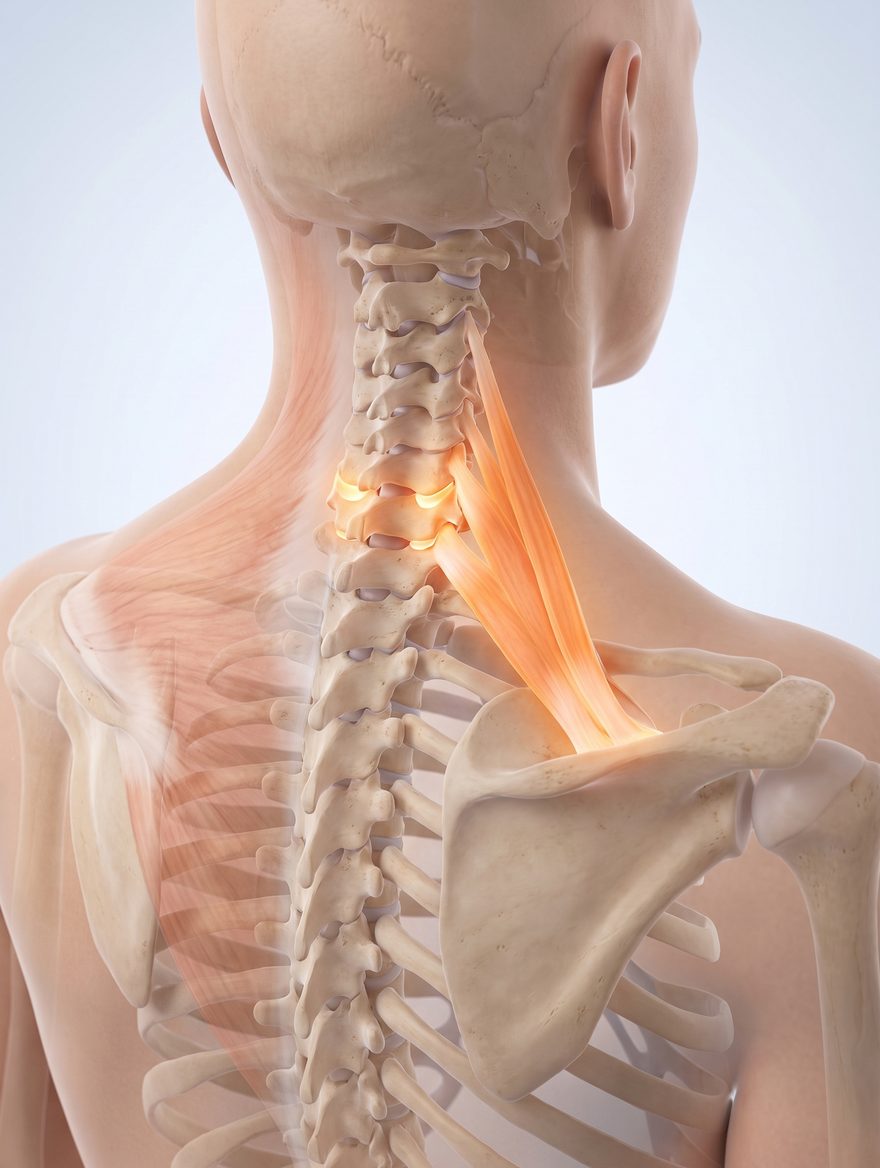
Wry neck symptoms usually come on suddenly and are mostly on one side of the neck.
Common symptoms
- Sudden neck pain and stiffness, most often on waking
- Difficulty turning the head to one side, or looking up or down
- The head held slightly tilted or turned away from the painful side
- Muscle spasm, with a tight, tender band at the side or back of the neck
- Pain that may spread towards the shoulder blade or bring on a headache
How wry neck usually settles
Most episodes follow a similar course:
- The first 1–2 daysPain and stiffness are usually at their worst, and turning the head is difficult.
- Days 3 to 7Pain gradually eases and movement slowly returns, helped by gentle movement.
- 1 to 2 weeksMost people are back to normal. Pain that lasts longer or keeps coming back is worth having assessed.
Pain, numbness or weakness spreading into the arm, or a stiff neck with a fever, is not typical of wry neck and needs a different assessment.
Wry neck often follows a position or movement that strains the neck.
- Sleeping in an awkward position, or on a pillow that is too high or too low
- Sleeping on your front with your head turned to one side
- Falling asleep sitting up, for example on a bus, a plane or the sofa
- A sudden, quick turn of the head
- Long hours looking down at a phone or laptop
- Unaccustomed work with the arms overhead, or carrying heavy bags on one shoulder
The Chinese name for wry neck means “fallen off the pillow”, because the stiffness so often appears after a night’s sleep.
These checks help you track your recovery and spot signs that need a different assessment. They can’t confirm a diagnosis. Move gently, and stop if the pain becomes sharp.

Turning check
Sit upright and, staying within comfortable limits, slowly turn your head to look over each shoulder, then look up and down. In wry neck, movement is usually blocked in one or two directions, most often turning or tilting towards the painful side, while other directions are freer. Note how far you can turn each day: steady improvement is a good sign.
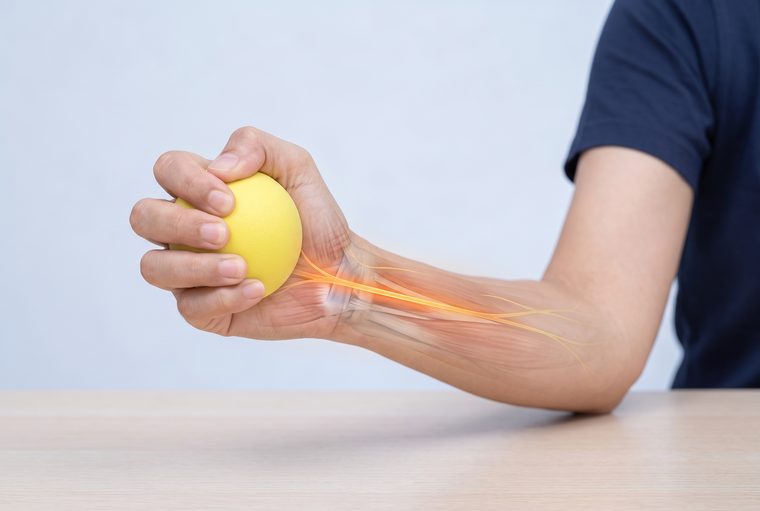
Arm symptom check
Check whether pain spreads below the shoulder and whether you have numbness or pins and needles in the arm or hand. Then squeeze a soft ball in each hand in turn: a clearly weaker grip on one side, or dropping things, suggests weakness. These aren’t typical of wry neck and suggest a nerve may be involved, which needs an assessment.
If you have a fever, a severe headache or any arm weakness, don’t wait for it to settle; see a doctor.
Most stiff necks on waking are wry neck, but a few other problems can look similar at first.
Wry neck
- Typical features
- Sudden neck pain and stiffness on waking or after a quick movement
- Other clues
- Movement blocked in some directions; no fever; gradually eases over days
Pinched nerve in the neck
- Typical features
- Neck pain spreading into the arm
- Other clues
- Numbness, pins and needles or weakness in the arm or hand
Meningitis
- Typical features
- A stiff, painful neck with a severe headache
- Other clues
- Fever, vomiting, dislike of bright light, drowsiness or a rash: call 999 or go to A&E
Neck injury
- Typical features
- Neck pain after a fall, a sports injury or a traffic accident
- Other clues
- Needs a medical assessment before any treatment, especially if over 65 or with numbness
Tension-type headaches and shoulder problems can also come with neck stiffness, and an examination helps tell them apart.
Further reading: Neck pain, Headaches and migraines.
Wry neck is diagnosed from your history and a physical examination. Scans are rarely needed.
Your history: How and when the stiffness started, your sleep position and pillow, recent activities, any injury, and symptoms such as fever, headache or arm symptoms.
Physical examination: Checking which neck movements are limited, the muscles and joints involved, and the nerves to the arms.
Further tests: Not usually needed. If there was an injury, there are nerve symptoms, or the pain doesn’t settle as expected, Dr. Ho may recommend an X-ray or MRI scan, or refer you to a doctor.
Wry neck usually settles by itself. Treatment aims to ease pain and help movement return comfortably.
Relief and treatment
- Gentle movement: Moving your neck gently within comfortable limits usually helps more than keeping it still. A neck collar is not usually recommended.
- Heat: A warm shower, or a heat pack wrapped in a towel for 15 to 20 minutes, may help tight muscles relax.
- Spinal adjustments and mobilisation: Gentle mobilisation or adjustments of the neck and upper back, where suitable, may ease pain and help movement return.
- Soft tissue care: Soft tissue work for the muscles in spasm around the neck and shoulder blade may ease tension.
- Exercises: Simple movement exercises while you recover, then strengthening for the neck and upper back if wry neck keeps coming back.
Treatment prescribed by a doctor
- Pain relief or muscle relaxants: Over-the-counter pain relief may help in the first few days; ask a pharmacist or doctor which is suitable for you. A doctor may sometimes prescribe a short course of a muscle relaxant.
If it keeps coming back
- Recurrent wry neck: Frequent episodes are worth an assessment of your neck and upper back, your strength, and your pillow, sleep position and work set-up.

Dr. Ho first checks for signs that need medical care, such as a fever, an injury or nerve symptoms, then examines which joints and muscles are involved and plans treatment based on the findings. General information only — your plan is set after an in-person assessment.
- 01
Assess
Checking neck and upper back movement, the muscles in spasm, nerve function in the arms, and any warning signs.
- 02
Treat
Gentle mobilisation or adjustments where suitable, soft tissue care and heat, staying within comfortable limits.
- 03
Rebuild
Movement and strengthening exercises, with advice on your pillow, sleep position and screen set-up to reduce repeat episodes.
- 04
Refer
If an infection, an injury, a nerve problem or another medical cause is suspected, you will be referred to a doctor or for imaging.
Wry neck can’t always be prevented, but these habits may make episodes less likely.
- Choose a pillow that keeps your neck level with the rest of your spine, whether you sleep on your back or side.
- Avoid sleeping on your front with your head turned to one side.
- Avoid falling asleep sitting up, and use a neck pillow on long journeys.
- Keep screens at eye level, and take regular breaks from looking down at your phone.
- Keep your neck and upper back mobile and strong with regular exercise.
- Warm up before sport, and carry heavy bags on alternate sides or use a backpack.

When to seek medical attention promptly
Seek medical attention promptly if any of the following apply:
- A stiff neck with a fever, severe headache, vomiting, dislike of bright light or a rash: call 999 or go to A&E
- Neck pain after a fall, a sports injury or a traffic accident
- Weakness, numbness or pins and needles in the arm or hand
- Sudden dizziness, double vision, difficulty speaking or swallowing, or unsteady walking: call 999
- A child with a twisted neck and a fever, sore throat or recent infection
- Pain that keeps getting worse or isn’t improving after a week, or with a history of cancer or unexplained weight loss
Most people improve noticeably within a few days and recover within one to two weeks. If the pain isn’t improving after a week, or keeps coming back, have it assessed.
Heat is usually more comfortable for wry neck, and it may help tight muscles relax. Use a warm shower, or a heat pack wrapped in a towel for 15 to 20 minutes, and never sleep on a heat pack.
Gentle self-massage of the muscles is fine, but avoid forcing your neck or trying to crack it yourself, and avoid strong massage on a very painful neck. Gentle movement within comfortable limits is safer.
There is little research on this. Sleeping in an awkward position seems to be a common trigger, and a cold draught on the neck may make tight muscles feel worse, so it is sensible not to have an air conditioner or fan blowing directly on your neck while you sleep.
No single pillow suits everyone. Choose one that keeps your head level with your spine: lower if you sleep on your back, and higher if you sleep on your side, to fill the space between your shoulder and head. Replace a pillow that has gone flat or lumpy.
That depends on your policy terms. Cover for outpatient care, imaging, surgery and chiropractic treatment varies between policies, so check with your insurer before your visit. We are happy to provide receipts to support your claim.
Disclaimer
This page is general information only, not a diagnosis or treatment advice. If you have any symptoms, please consult a qualified healthcare professional.
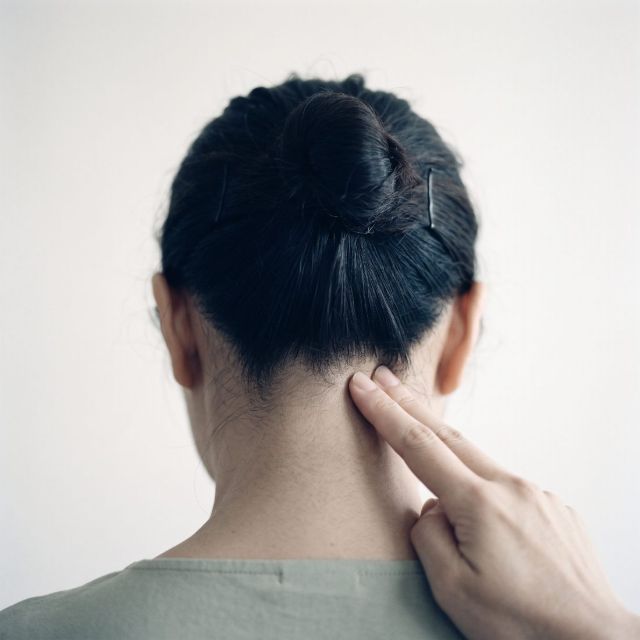


Book a consultation with Dr. Ho, or message us on WhatsApp with any questions first.