Condition
Stiffness and pain often linked to desk work and posture.
We’re closed right now. WhatsApp us and we’ll reply when we open.
- Registered Chiropractor 註冊脊醫
- Doctor of Chiropractic D’Youville College, USA
- Whampoa & Hung Hom Near Whampoa MTR
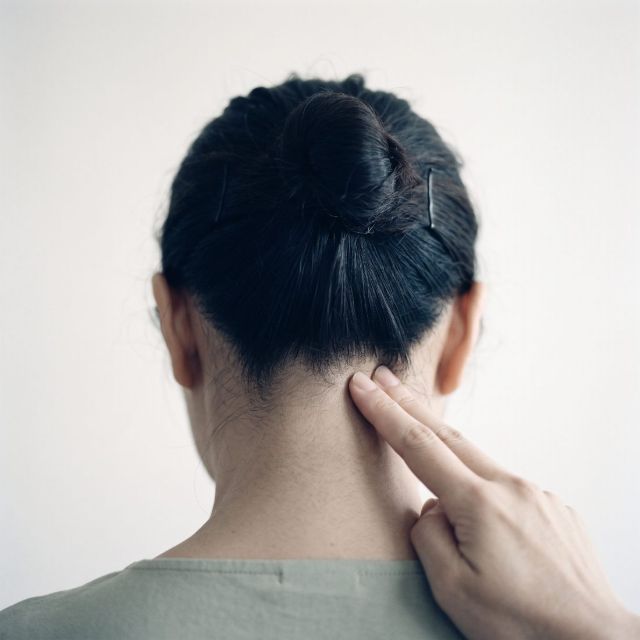
Neck pain is pain or stiffness in the neck, often spreading across the top of the shoulders or up to the back of the head. Most of it comes from the joints and muscles of the neck, and is often linked to long hours at a desk or on a phone, or to sleeping awkwardly. Most neck pain settles within a few weeks. Pain after an injury, with fever and a stiff neck, or with numbness, weakness, dizziness or trouble speaking needs prompt medical attention.
Key points
- Most neck pain is mechanical: it comes from the joints and muscles of the neck and changes with posture and movement.
- Pain, tingling or numbness spreading down an arm suggests an irritated nerve root in the neck.
- Keeping the neck moving usually helps more than resting it. Treatment ranges from exercise, posture changes and hands-on care to medication; surgery is rarely needed.
- Neck pain after an injury, with fever and a stiff neck, or with dizziness, double vision, trouble speaking or clumsy hands needs prompt medical attention.
The neck is made up of seven vertebrae, with discs between them and a pair of small facet joints at the back of each level. Layers of muscles, including the upper trapezius and the levator scapulae, run from the skull and neck to the shoulder blades, and nerve roots leave the spine between the vertebrae to supply the shoulders, arms and hands.
Most neck pain comes from these joints and muscles being strained, stiff or overloaded, often by holding the head forward over a screen for long periods. Less often, a disc or bone spur irritates a nerve root and causes pain or numbness down the arm. Waking with a sudden stiff neck you can’t turn is often wry neck, which usually settles within days.
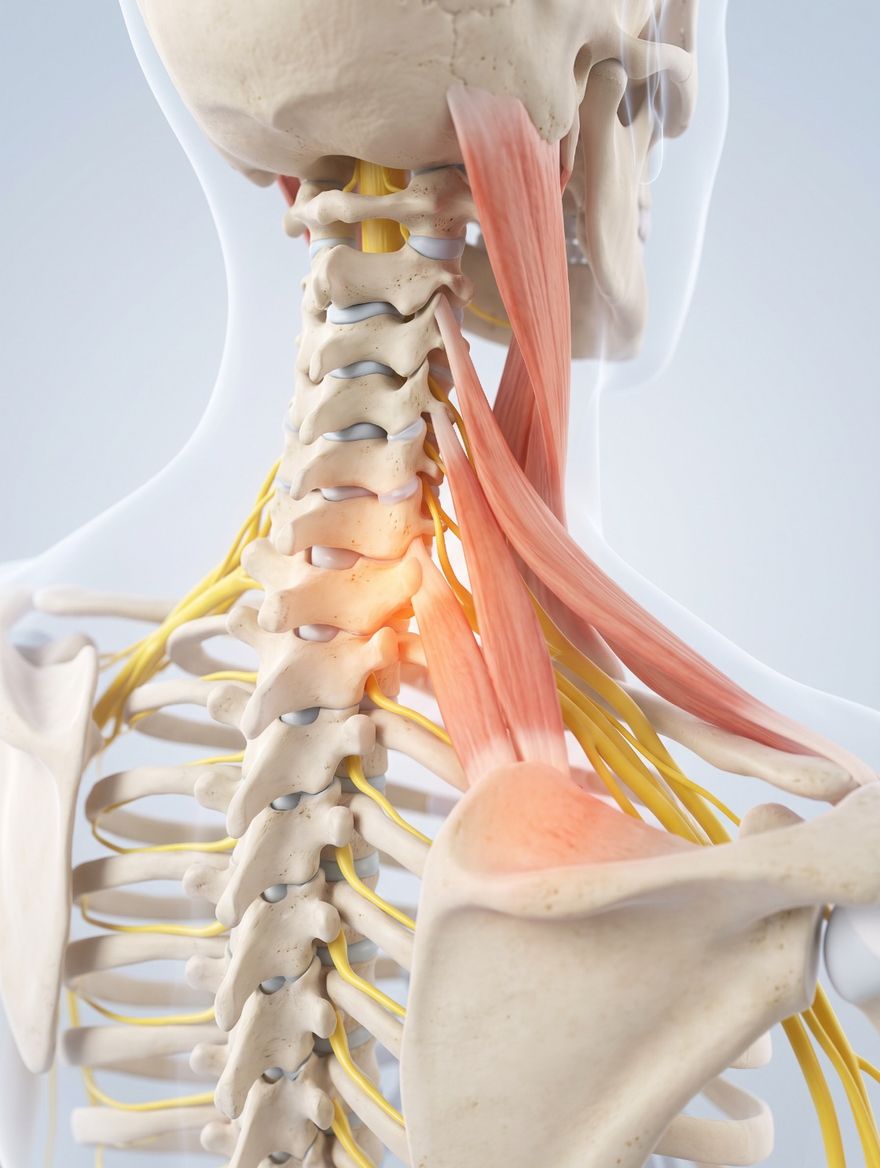
Neck pain can come on suddenly, after sleeping awkwardly or a strain, or build up over weeks of desk work.
Common symptoms
- Aching or stiffness in the neck, often spreading across the top of the shoulders or between the shoulder blades
- Pain or stiffness when turning your head, checking a blind spot or looking up
- Tight, tender muscles at the base of the skull or across the shoulders
- Headaches starting at the back of the head
- Pain, tingling or numbness spreading down an arm into the hand
How long it lasts
Neck pain is usually described by how long it has lasted:
- AcuteUp to about six weeks. Most neck pain settles within a few weeks, especially if you keep the neck gently moving.
- SubacuteSix to twelve weeks. Pain that lingers is worth having assessed, to find what is keeping it going.
- PersistentOver twelve weeks. Long-lasting pain is often kept going by posture, desk habits, sleep and stress, and usually needs a plan that combines exercise with treatment.
Neck pain often comes and goes with workload and stress, so recovery usually includes exercises and changes to how you work and sleep.
Most neck pain develops when the neck holds one position, or takes more load, than it is ready for.
- Long hours at a desk or laptop, or looking down at a phone, with the head held forward (see Dowager’s hump)
- Sleeping awkwardly, or on a pillow that is too high or too flat (see Wry neck)
- Stiff or irritated facet joints and tight muscles, often linked to stress and poor sleep
- Wear-related changes in the joints and discs (cervical spondylosis), which become common with age and often cause no pain
- A disc or bone spur irritating a nerve root, causing pain or numbness down the arm (see Hand numbness)
- Injuries such as whiplash from a car accident or a fall
Neck pain is one of the most common reasons people see a chiropractor, and office workers are among those most often affected.
These two simple checks can give a first indication of what kind of neck pain you have, but they cannot confirm a diagnosis. Move slowly, and stop if you feel dizzy or symptoms spread down an arm.

Can you turn your head equally both ways?
Sit upright with your shoulders still and slowly turn your head to look over one shoulder, then the other. Most people can bring the chin nearly in line with the shoulder. A clear difference between the two sides, or pain at the end of the turn, fits stiffness in the joints and muscles of the neck.

Do arm symptoms change with neck position?
If you have arm pain, tingling or numbness, notice whether it comes on or changes when you look up or turn your head towards the painful side, and whether resting that hand on top of your head eases it. Arm symptoms that change with neck position suggest an irritated nerve root. Don’t push into positions that bring them on.
These checks can’t rule other causes in or out. If pain keeps coming back, lasts more than a few weeks or comes with arm symptoms, have it properly assessed by a healthcare professional.
Several problems can cause pain in the neck and shoulders. Finding where it comes from is the key to choosing the right treatment.
Mechanical neck pain (joints and muscles of the neck)
- Where it usually hurts
- The back and sides of the neck, across the top of the shoulders, sometimes the back of the head
- Other clues
- Stiffness; worse with long desk work or certain head positions; no numbness in the arm
An irritated nerve root in the neck
- Where it usually hurts
- From the neck into the shoulder blade and down the arm, sometimes into the fingers
- Other clues
- Tingling, numbness or weakness in the arm or hand; may change with neck position
Shoulder problems (such as the rotator cuff)
- Where it usually hurts
- The front or side of the shoulder and the upper arm
- Other clues
- Worse lifting or reaching with the arm; moving the neck doesn’t change it
Heart problems
- Where it usually hurts
- The neck, jaw, shoulder or arm, usually with chest discomfort
- Other clues
- Comes on with exertion, with breathlessness, sweating or feeling sick. Call 999
Pain or numbness in the hand can also come from a nerve squeezed at the elbow or the wrist rather than the neck.
Further reading: Wry neck, Shoulder pain, Hand numbness.
Diagnosis relies mainly on your history and a physical examination. Most people with neck pain don’t need an X-ray or MRI scan.
Your history: When and how the pain started, where you feel it, your work, screen and sleep habits, and questions to check for warning signs.
Physical examination: Checking how your neck, upper back and shoulders move, pressing over the joints and muscles, and testing the strength, reflexes and sensation in your arms.
Further tests: Scans help only in some cases, such as after an injury, with arm weakness or signs of pressure on the spinal cord, or when surgery is being considered. If needed, Dr. Ho will refer you for an X-ray or MRI scan, or to a doctor.
Most people improve with non-surgical treatment. Treatment usually aims to ease the pain, get the neck moving freely and change the habits that keep it coming back.
Non-surgical treatment
- Keeping the neck moving: Gentle movement within comfort, rather than resting it or wearing a collar, unless a doctor advises one.
- Exercise and rehabilitation: Exercises that restore movement and strengthen the neck and shoulder muscles, built up gradually under guidance.
- Spinal manipulation and mobilisation: Hands-on treatment to the neck and upper back, which may help ease pain and stiffness as part of a plan that includes exercise.
- Soft tissue treatment: Releasing tight muscles in the neck and shoulders, which may ease pain in the short term.
- Posture and workstation advice: Looking at how you sit, work and use screens, and what to change.
- Heat or cold: A heat pack may ease stiff, tight muscles; a cold pack may help after a strain.
Treatment prescribed by a doctor
- Medication: Painkillers or an anti-inflammatory gel may ease pain in the short term; check with a doctor or pharmacist which suits you. For severe nerve pain, a specialist may consider other medicines or an injection.
Surgery
- Neck surgery: Rarely needed. It may be considered when a disc or bone spur presses on a nerve root with severe pain or worsening weakness, or on the spinal cord.

Dr. Ho first finds what is causing your neck pain, then plans treatment based on the findings. General information only — your plan is set after an in-person assessment.
- 01
Assess
Examining your neck, upper back and shoulders and testing the nerves to your arms, with questions to check for anything that needs a doctor’s attention.
- 02
Treat
Hands-on adjustment or gentler mobilisation of the neck and upper back, with soft tissue work for tight muscles, chosen to suit you.
- 03
Exercise and habits
Neck and shoulder exercises, with practical advice on your desk set-up, phone use, pillow and breaks.
- 04
Refer
If there are warning signs, arm weakness, or pain that doesn’t improve, you will be referred to a doctor or for imaging.
Small changes to how you work, use your phone and sleep can take a lot of load off the neck.
- Set the top of your screen at about eye level and sit close enough that you don’t lean forward; a laptop needs a stand and a separate keyboard.
- Hold your phone up nearer eye level rather than looking down at it for long periods.
- Take a short break every 30 to 60 minutes to stand up, roll your shoulders and turn your head gently.
- Use a pillow that keeps your head level with your body, and avoid sleeping on your front.
- Keep active: regular exercise and shoulder and upper back strengthening help support the neck.
- Carry bags on both shoulders or switch sides, and use a headrest on long drives.

When to seek medical attention promptly
Seek medical attention promptly if any of the following apply:
- Neck pain after a significant fall, a car accident or a blow to the head
- Fever with a headache and a stiff neck, especially with a rash or sensitivity to light (call 999 or go to A&E)
- Sudden dizziness, double vision, trouble speaking or swallowing, a drooping face or weakness on one side (call 999)
- Clumsy hands, or a change in walking or balance
- Arm weakness or numbness that is getting worse
- Neck pain with chest pain or breathlessness, unexplained weight loss, or a past history of cancer
One that keeps your head level with the rest of your spine. Back sleepers usually need a lower pillow, and side sleepers one high enough to fill the gap between the ear and the shoulder. Try to avoid sleeping on your front, which twists the neck.
It often is. Holding the head forward over a laptop or phone for long periods loads the neck and shoulder muscles. Regular breaks and a good desk set-up usually matter more than holding one "perfect" posture.
Yes. Problems in the upper neck can cause a headache that starts at the back of the head, and tension-type headaches often come with tight neck and shoulder muscles. See Headaches for the warning signs that need a doctor.
It can be. An irritated nerve root in the neck can cause tingling or numbness in the arm and hand, often with neck pain. But nerves can also be squeezed at the elbow or the wrist, so the neck, elbow and wrist are checked together. See Hand numbness.
For most people, treatment by a registered chiropractor is safe. Mild soreness for a day or two is common, and serious complications are rare. Dr. Ho checks your history and screens for warning signs first, and can use gentler techniques if you prefer not to have the neck adjusted.
Disclaimer
This page is general information only, not a diagnosis or treatment advice. If you have any symptoms, please consult a qualified healthcare professional.
Treatment

Chiropractic Spinal Adjustments
Hands-on, targeted adjustment of spinal and joint restrictions to help restore normal movement.Read more
Soft Tissue Care
Hands-on and instrument-assisted soft tissue work, including the Graston Technique, to address muscle and fascial tightness.Read more
Posture Analysis
A structured assessment of your posture and spinal alignment to help identify contributing factors.Read more



Book a consultation with Dr. Ho, or message us on WhatsApp with any questions first.