Condition
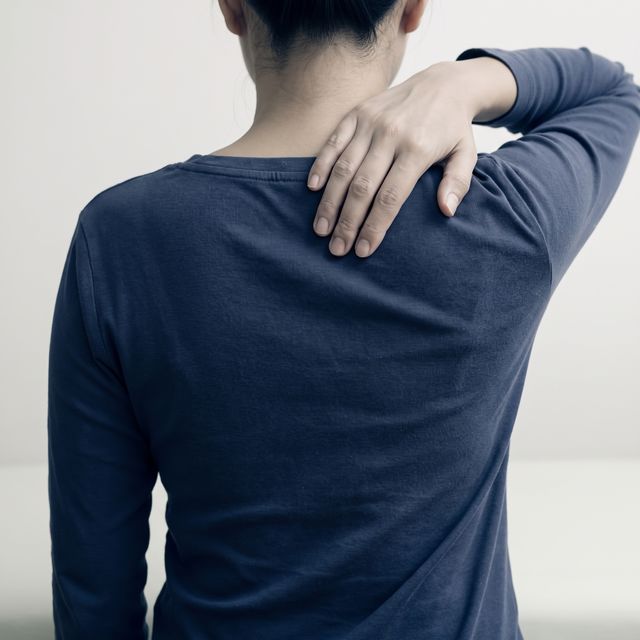
Aching or stiffness between the shoulder blades and in the mid back.
We’re closed right now. WhatsApp us and we’ll reply when we open.
- Registered Chiropractor 註冊脊醫
- Doctor of Chiropractic D’Youville College, USA
- Whampoa & Hung Hom Near Whampoa MTR
Upper back pain is pain anywhere from the base of the neck to the bottom of the rib cage, often felt between or around the shoulder blades. It is less common than lower back pain, and most of the time it comes from the muscles and joints of the upper back, often linked to long hours at a desk or on a phone, lifting or a sudden twist. Most cases improve with movement, better daily habits and time. Because the heart, lungs and some abdominal organs can also cause pain felt in the back, it is important to know the warning signs.
Key points
- Most upper back pain comes from muscles and joints, and it changes with movement and posture.
- Long periods at a desk or looking down at a phone are common contributing factors.
- Staying active, taking regular breaks and doing upper-back exercises usually help more than rest.
- Back pain with chest pain, breathlessness, fever or weight loss needs prompt medical attention.
The upper and mid back, also called the thoracic spine, is made up of 12 vertebrae, each joined to a pair of ribs. The rib cage makes this part of the spine stiffer and more stable than the neck or the lower back, which is one reason it is injured less often. Layers of muscles, including the trapezius and the rhomboids between the shoulder blades, hold the shoulder blades in place and keep the upper body upright.
Pain usually comes from strained or overworked muscles, stiff joints between the vertebrae, or irritated joints where the ribs meet the spine. Sitting slumped for long periods, holding a phone low, carrying a heavy bag on one shoulder or a sudden twist can all bring it on. Less often, the pain comes from a disc, a compression fracture in someone with weak bones, or an organ in the chest or abdomen.
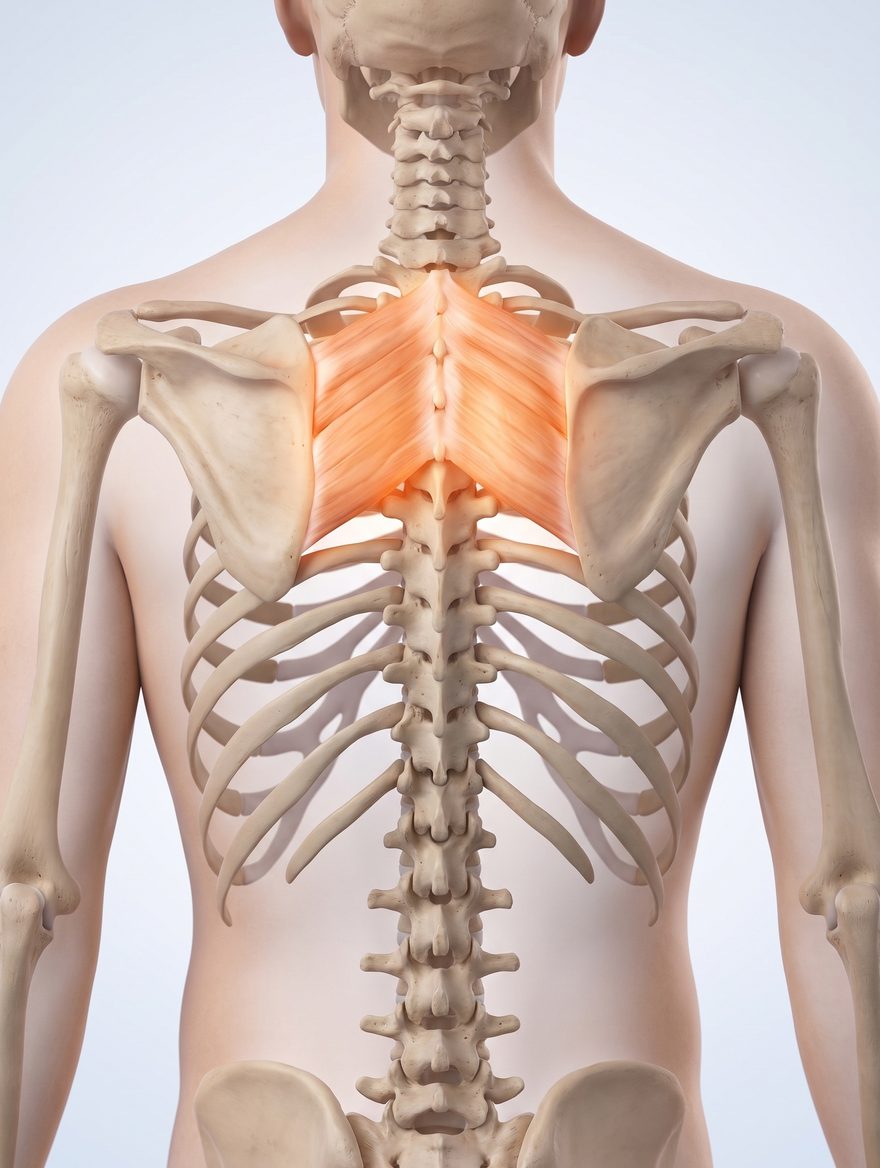
Symptoms range from a dull ache to a sharp, catching pain, and often build up over the working day.
Common symptoms
- An ache or burning feeling between the shoulder blades
- Stiffness in the upper back, especially when twisting or sitting up tall
- Sharp pain when turning, reaching or taking a deep breath, if a rib joint is irritated
- Tight, tender muscles beside the spine or along the shoulder blade
- Pain that gets worse after long periods of sitting and eases with movement
How it usually settles
Most muscle and joint pain in the upper back follows this pattern:
- First daysPain is at its worst and some movements, such as twisting, catch sharply. Gentle movement is better than bed rest.
- Weeks 1 to 2Pain eases as you return to normal activities. Regular breaks from sitting help it settle.
- Weeks 2 to 6Most people are back to normal. Exercises for the upper back help reduce the chance of it coming back.
Pain that keeps coming back is often linked to daily habits, such as long hours at a screen, rather than a single injury.
Upper back pain is usually caused by several small strains adding up, rather than by one injury.
- Sitting for long periods, especially slumped or leaning towards a screen
- Looking down at a phone or tablet for long periods
- Lifting, twisting or reaching awkwardly, or a sudden increase in sport or training
- Carrying a heavy bag on one shoulder
- Weak or tired upper-back muscles, and stiffness in the thoracic spine
- Stress, poor sleep and low activity levels, which make pain more likely to persist
Upper back pain is less common than neck or lower back pain, partly because the rib cage makes the mid back more stable.
These checks can suggest whether your pain is coming from the muscles and joints. They can’t confirm a diagnosis or rule out other causes. Stop if either causes sharp pain.
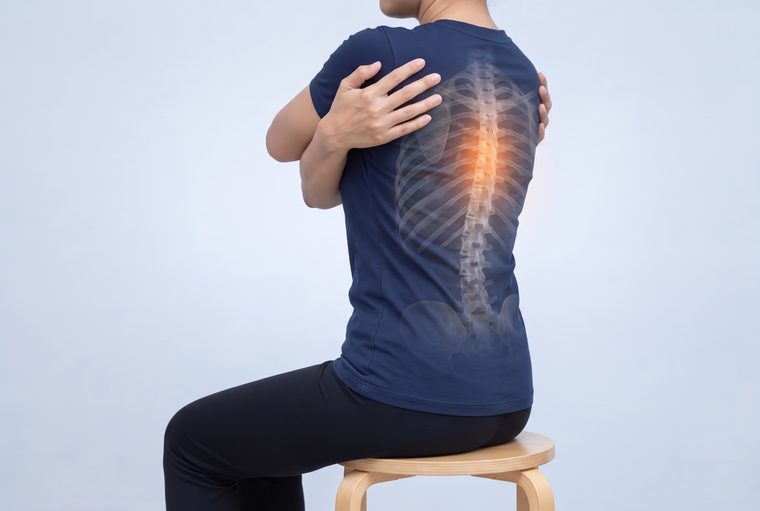
Movement and posture check
Sit on a chair or stool with your arms crossed over your chest. Slowly turn your upper body to each side, then sit up tall and slump. If the pain changes clearly with these movements or positions, it is likely to be coming from the muscles and joints of the upper back.

Spot tenderness check
Ask someone to press gently along the muscles beside your spine and along the inner edge of your shoulder blade. Tight, tender spots that bring on your familiar ache suggest the muscles are involved.
Pain that doesn’t change at all with movement or position, wakes you at night, or comes with chest pain, breathlessness, fever or feeling unwell is not typical of a muscle or joint problem. See a doctor.
Most upper back pain comes from muscles and joints, but some organs can cause pain that is felt in the back. Knowing the difference matters.
Muscle and joint pain (the most common cause)
- Where it usually hurts
- Between or around the shoulder blades, beside the spine
- Other clues
- Changes with movement, posture or pressure; stiffness after sitting
Heart problems
- Where it usually hurts
- The upper back or between the shoulder blades, often with pain in the chest, arm, neck or jaw
- Other clues
- Breathlessness, sweating or nausea, during exertion or at rest; call 999
Lung problems
- Where it usually hurts
- One side of the back or chest
- Other clues
- Pain when breathing in, a cough, fever or breathlessness
Gallbladder or stomach problems
- Where it usually hurts
- Under the right shoulder blade, or the mid back
- Other clues
- Linked to meals, with upper abdominal pain, nausea or indigestion
Shingles
- Where it usually hurts
- A band on one side of the back and chest
- Other clues
- Burning or tingling pain, followed a few days later by a blistering rash
Pain below the rib cage is covered on the lower back pain page, and a rounded hump at the base of the neck on the dowager’s hump page.
Further reading: Neck pain, Lower back pain.
Upper back pain is diagnosed mainly from your history and a physical examination.
Your history: When and how the pain started, what makes it better or worse, your work and daily habits, and any other symptoms, such as chest pain or breathlessness.
Physical examination: Checking your posture, how your upper back, neck and shoulders move, where it is tender, and the nerves to your arms and legs where needed.
Further tests: Usually not needed. If a fracture, a disc problem or a cause outside the spine is suspected, Dr. Ho may recommend an X-ray or MRI scan, or refer you to a doctor.
Most upper back pain improves without complex treatment. Treatment aims to ease the pain, restore movement and change the habits that keep it going.
Non-surgical treatment
- Staying active: Keeping up your normal activities as much as you can, with short, regular breaks from sitting, usually helps more than rest.
- Heat and simple pain relief: A warm pack may ease muscle tension. Ask a pharmacist or doctor which pain relief is suitable for you.
- Exercise for the upper back: Mobility exercises for the thoracic spine and strengthening for the muscles around the shoulder blades may help reduce pain and the chance of it returning.
- Spinal adjustments and mobilisation: Hands-on treatment to the joints of the upper back and ribs may help ease pain and stiffness in the short term, alongside exercise.
- Soft tissue treatment: Massage and instrument-assisted soft tissue work may ease tight, tender muscles.
Treatment prescribed by a doctor
- Medication: Pain relief or a short course of anti-inflammatory medication may be suggested. Other causes, such as heart, lung or digestive problems, are treated according to the cause.
Surgery
- Rarely needed: Surgery is only considered for specific problems, such as a disc pressing on the spinal cord or an unstable fracture.

Dr. Ho first checks for signs that your pain may not be coming from the spine, then plans treatment based on the findings. General information only — your plan is set after an in-person assessment.
- 01
Assess
Checking your posture, upper back, neck, shoulders and ribs, and asking about other symptoms that may point to a cause outside the spine.
- 02
Treat
Hands-on treatment to stiff joints in the upper back and ribs, and soft tissue care for tight muscles, where suitable.
- 03
Rebuild
Mobility and strengthening exercises, and advice on your desk set-up, phone use and breaks.
- 04
Refer
If your symptoms suggest a heart, lung or other medical cause, or a fracture, you will be referred to a doctor promptly.
Small, regular changes to how you sit and move matter more than holding a perfect posture.
- Set your screen at eye level and close enough to read without leaning forward.
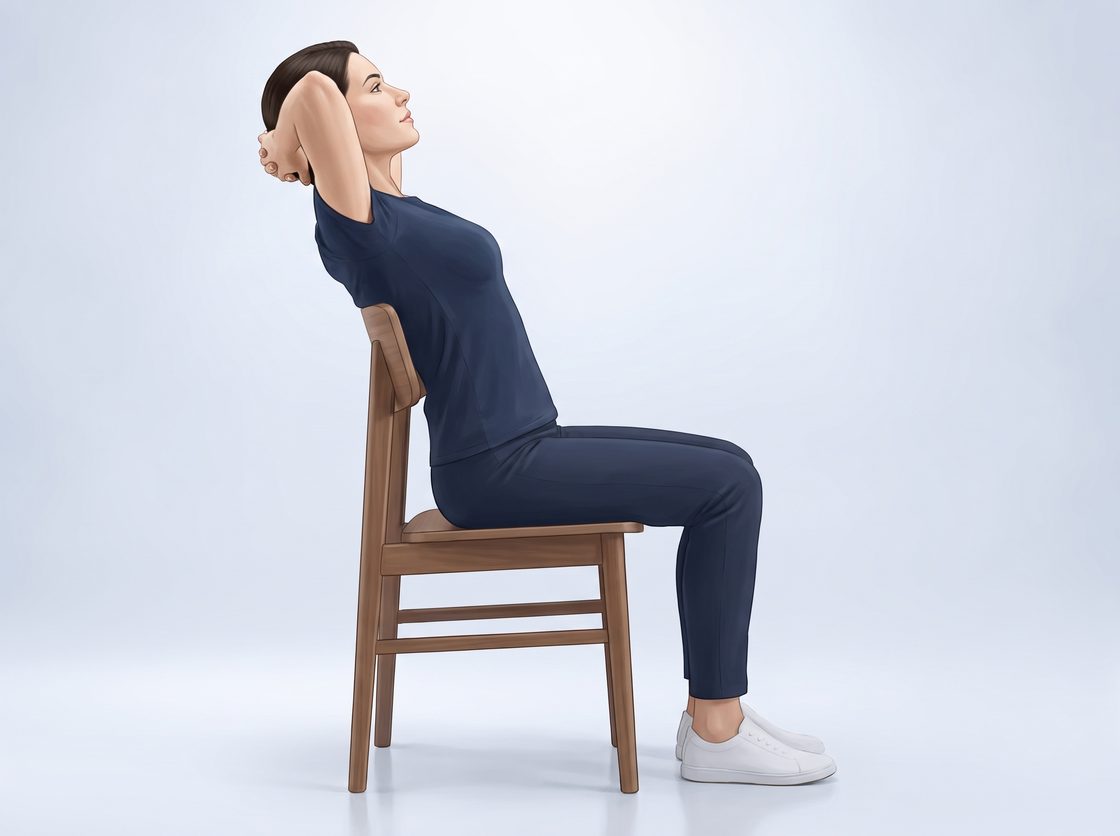
- Get up and move every 30 to 60 minutes: roll your shoulders and stretch your upper back.
- Hold your phone closer to eye level instead of looking down for long periods.
- Strengthen the muscles between your shoulder blades with exercises such as rows.
- Carry heavy loads in both hands or in a backpack rather than on one shoulder.
- Stay active overall: walking, swimming and other regular exercise help keep the back healthy.
When to seek medical attention promptly
Seek medical attention promptly if any of the following apply:
- Chest pain, breathlessness, sweating, or pain spreading to the arm, neck or jaw: call 999
- Back pain after a fall or accident, or in someone with osteoporosis
- Fever, feeling unwell, or unexplained weight loss
- A history of cancer, or pain that is constant and worse at night
- Numbness or weakness in the legs, or problems controlling the bladder or bowels
- A burning band of pain on one side, followed by a rash
Most often, strained or tired muscles and stiff joints in the upper back, frequently linked to long periods of sitting or looking down at a screen. Less often, the neck, a rib joint, or an organ such as the heart or gallbladder can cause pain in this area, so pain that comes with other symptoms should be checked.
Have it checked promptly if it comes with chest pain, breathlessness, fever, unexplained weight loss, a history of cancer, pain that is constant and worse at night, or numbness or weakness. Most upper back pain is not serious, but these signs need a doctor.
Most muscle and joint pain in the upper back improves within a few days to a few weeks. Pain that keeps returning is often linked to daily habits and usually responds to changes in how you sit and move, and to exercise.
Keep moving within comfort. Short breaks from sitting and gentle movement usually help more than rest. For the first few days, avoid positions that sharply increase the pain.
It can play a part, but daytime habits usually matter more. A pillow that keeps your neck level with your body and a mattress you find comfortable are reasonable starting points.
That depends on your policy terms. Cover for outpatient care, imaging, surgery and chiropractic treatment varies between policies, so check with your insurer before your visit. We are happy to provide receipts to support your claim.
Disclaimer
This page is general information only, not a diagnosis or treatment advice. If you have any symptoms, please consult a qualified healthcare professional.

Book a consultation with Dr. Ho, or message us on WhatsApp with any questions first.