Condition
Pain on the thumb side of the wrist, worse when you grip or move the thumb.
We’re closed right now. WhatsApp us and we’ll reply when we open.
- Registered Chiropractor 註冊脊醫
- Doctor of Chiropractic D’Youville College, USA
- Whampoa & Hung Hom Near Whampoa MTR
De Quervain’s tenosynovitis is pain on the thumb side of the wrist, where two tendons that move the thumb pass through a narrow tunnel over the end of the radius bone. When the lining of the tunnel thickens, the tendons can no longer glide freely, and gripping, pinching, lifting or turning the wrist becomes painful. It is often linked to repeated thumb and wrist use and is common in new parents, which is why it is sometimes called “mummy thumb”. Most cases improve with less strain on the thumb, a thumb splint and exercises; if the pain follows a fall, or comes with numbness or a hot, red swelling, seek medical attention promptly.
Key points
- The classic symptom is pain at the base of the thumb and the thumb side of the wrist, worse when you grip, pinch, lift a baby or turn a key.
- Folding the thumb into your fist and bending the wrist towards the little finger usually brings on the pain.
- Treatment depends on severity: from changing how you lift and grip, a thumb splint and exercises, to a steroid injection or, rarely, surgery.
- Pain after a fall onto the hand needs checking for a fracture, especially of the scaphoid, a small wrist bone where breaks are easily missed.
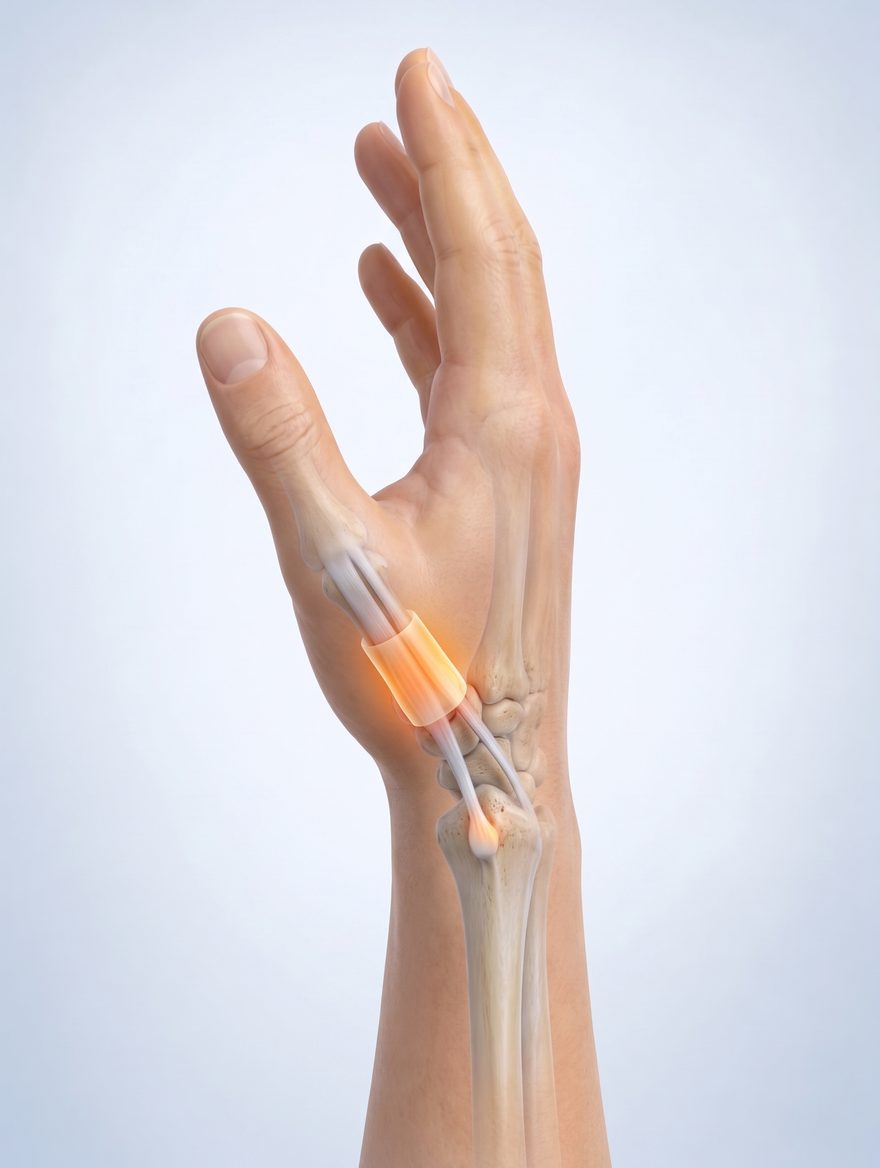
Two tendons run along the thumb side of the wrist: abductor pollicis longus, which moves the thumb away from the hand, and extensor pollicis brevis, which straightens it. At the wrist they pass side by side through a tunnel, the first dorsal compartment, over a bony bump at the end of the radius called the radial styloid.
In De Quervain’s tenosynovitis, the lining of this tunnel thickens, so the tendons are squeezed and rub as they move. The name ends in “-itis”, but the main change is thickening of the tunnel rather than ongoing inflammation. Some people have a dividing wall inside the tunnel, which makes the space even tighter and can make treatment less effective.
Pain usually comes on gradually, though some people notice it after a burst of new activity, such as caring for a newborn.
Common symptoms
- Pain and tenderness at the base of the thumb and the thumb side of the wrist, which may spread up the forearm
- Pain when gripping, pinching, lifting or twisting, such as lifting a baby, wringing out a towel or turning a key
- Swelling over the thumb side of the wrist, sometimes with a small fluid-filled lump
- A catching or creaking feeling when you move the thumb
- A weaker grip or pinch
How it progresses
It usually progresses in these stages:
- EarlyPain comes on after heavy or repeated use of the thumb and wrist, and settles with rest.
- MiddleEveryday tasks such as lifting a baby, using your phone or opening a jar are painful.
- LatePain is there even at rest, swelling may be visible, and the thumb feels weak or stiff.
Symptoms in new parents often improve as the baby grows and lifting changes, but pain that lasts more than a few weeks is worth having assessed.
It usually develops when the thumb and wrist are used repeatedly in the same way, especially gripping with the wrist bent to one side.
- Lifting and carrying a baby with the thumbs spread wide, often in the first months after birth
- Repeated thumb and wrist movements, such as typing on a phone with the thumb, using a mouse, gardening or racquet sports
- Hormonal changes during pregnancy and breastfeeding
- Being a woman aged 30 to 50
- A direct knock to the thumb side of the wrist
- Conditions such as rheumatoid arthritis
It is several times more common in women than in men, and is particularly common during pregnancy and in the year after giving birth.
These two simple checks can give a first indication, but they cannot confirm a diagnosis. Stop if either causes sharp pain.
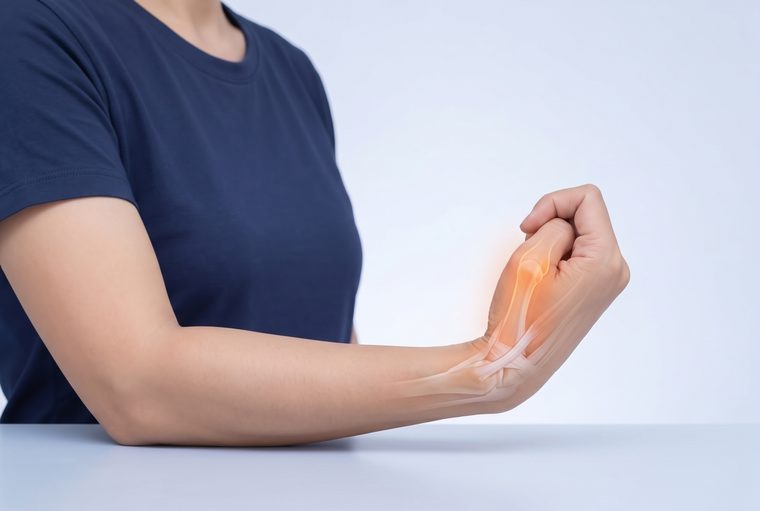
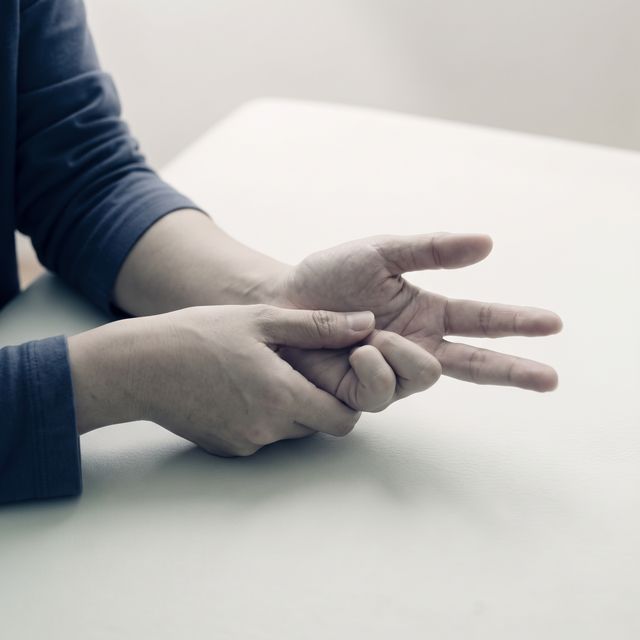
Thumb-in-fist test (Finkelstein’s test)
Fold your thumb into your palm and close your fingers over it. Rest your forearm on a table and gently bend your wrist towards the little-finger side. Sharp pain on the thumb side of the wrist is a positive result.
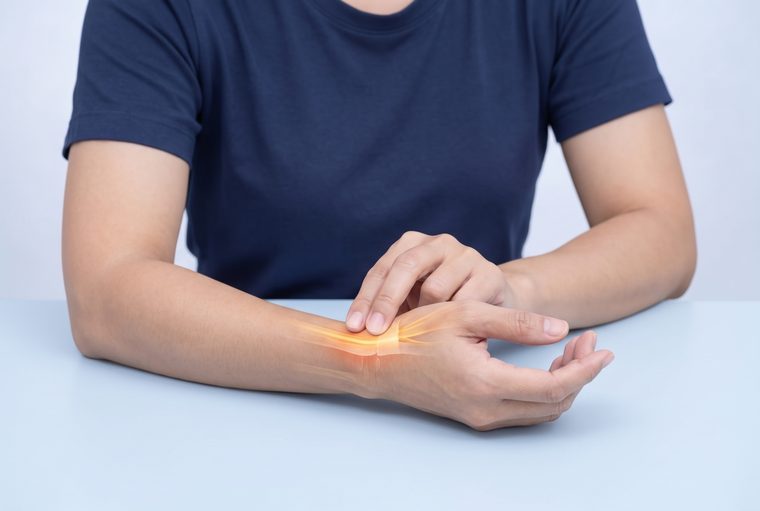
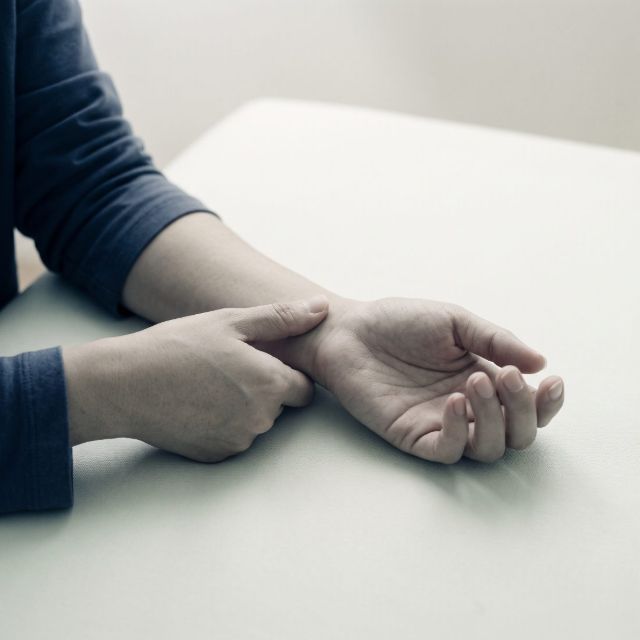
Tenderness check
Press gently with two fingertips on the thumb side of the wrist, just above the base of the thumb, over the bony bump. Tenderness here, especially with some swelling, is a positive result.
A positive result doesn’t confirm De Quervain’s tenosynovitis, since pain at the base of the thumb can also come from arthritis, and a negative one doesn’t rule it out. If pain keeps coming back or affects your daily life, have it assessed by a healthcare professional.
Several conditions can cause pain at the base of the thumb or the thumb side of the wrist. Finding where the pain is coming from is the key to choosing the right treatment.
De Quervain’s tenosynovitis (the thumb tendons at the wrist)
- Where it usually hurts
- The thumb side of the wrist, over the bony bump just above the base of the thumb
- Other clues
- Worse with gripping and lifting; the thumb-in-fist test is painful; sometimes swelling
Thumb base arthritis
- Where it usually hurts
- Deeper, at the joint at the base of the thumb, closer to the palm
- Other clues
- Pain when pinching or turning a key; a grinding feeling; more common over 50
Scaphoid fracture
- Where it usually hurts
- The small hollow at the base of the thumb on the back of the wrist
- Other clues
- Follows a fall onto an outstretched hand; can be missed on a first X-ray
Intersection syndrome
- Where it usually hurts
- A few finger-widths higher up, on the back of the forearm
- Other clues
- Pain and creaking with wrist movement, often after rowing, weight training or heavy lifting
Numbness or tingling over the back of the thumb can come from irritation of a nearby nerve branch, sometimes from a tight strap or watch. Dr. Ho checks the wrist, the thumb joints and the nerves together to find where the pain is coming from.
Further reading: Carpal tunnel syndrome, Trigger finger.
Diagnosis relies mainly on your history and a physical examination. Scans are usually not needed.
Your history: When and where the pain appears, your hand-use habits, and recent changes such as caring for a newborn.
Physical examination: Pressing over the thumb tendons, the thumb-in-fist test, and checking the thumb joints, wrist and nerves to rule out other causes.
Further tests: If the diagnosis is unclear or the pain doesn’t improve, Dr. Ho may suggest an ultrasound scan or an X-ray, for example after a fall or if arthritis is suspected, or refer you to an orthopaedic or hand surgeon.
Most people improve without surgery. Treatment aims to reduce the strain on the thumb tendons so the swelling can settle.
Non-surgical treatment
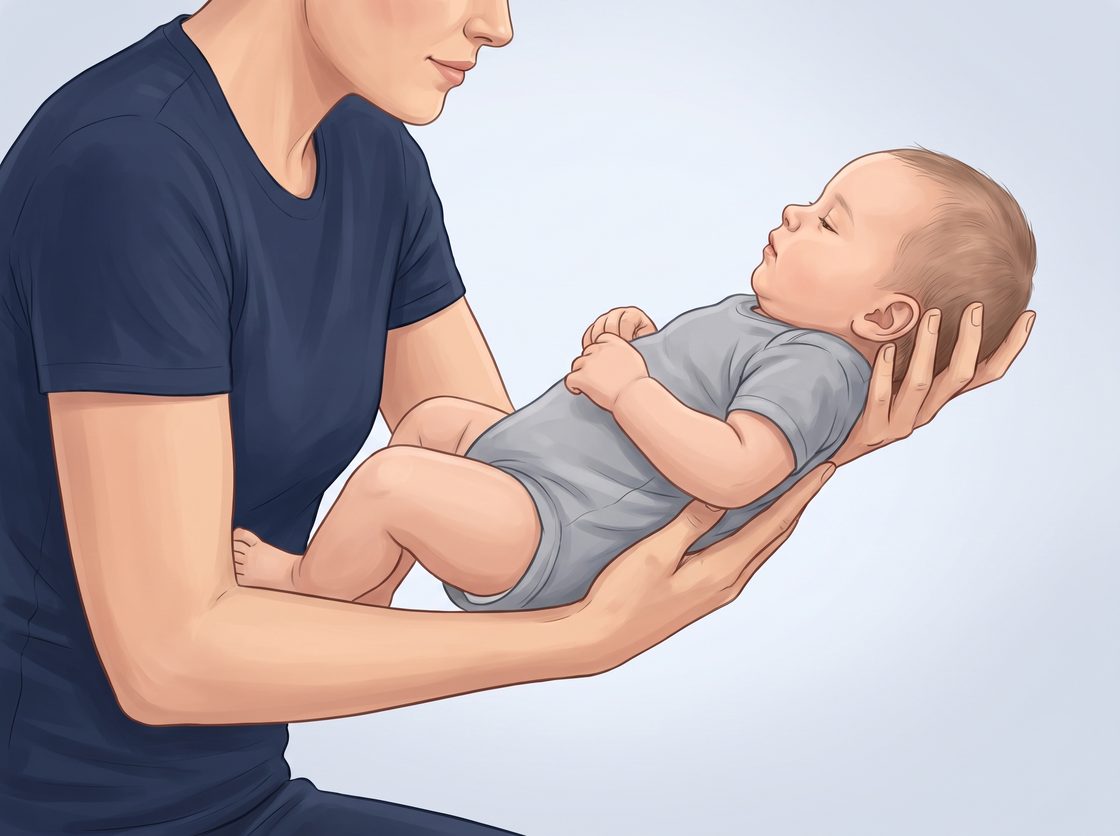
- Changing how you lift and grip: Lifting a baby by scooping under them with your palms rather than with your thumbs spread wide, keeping your wrist straight, and taking breaks from repetitive tasks.
- Thumb splint: A splint that supports the thumb and wrist, worn for several weeks, may help the pain settle. Thumb splints are generally available from pharmacies or hand therapists.
- Rehabilitation exercises: Gentle stretching, then gradual strengthening once the pain begins to settle.
- Soft tissue treatment: Easing tight tissues in the forearm and thumb may help with pain and movement in the short term.
- Ultrasound therapy: The research evidence is limited; it is generally used only as a supporting treatment.
Treatment prescribed by a doctor
- Medication or injections: Painkillers or anti-inflammatory medication may ease pain in the short term. A steroid injection into the tendon sheath often relieves symptoms and is widely used, especially combined with a splint.
Surgery
- De Quervain’s release: A short procedure, usually under local anaesthetic, that opens the tunnel so the tendons can move freely. It is generally considered only if symptoms persist despite other treatment.

Dr. Ho first finds what is causing your wrist pain, then plans treatment based on the findings. General information only — your plan is set after an in-person assessment.
- 01
Assess
Examining the thumb tendons, thumb joints, wrist, forearm and nerves to tell De Quervain’s apart from arthritis, a fracture or nerve irritation.
- 02
Treat
Soft tissue treatment for the forearm and thumb, combined with ultrasound therapy where needed, and advice on whether a thumb splint may help.
- 03
Exercise and habits
Gentle stretching and strengthening, with practical advice on lifting your baby, using your phone and gripping at work.
- 04
Refer
If the pain doesn’t improve, a fracture is possible, or an injection or surgery may need to be considered, you will be referred for imaging or to a doctor.
Small changes to how you lift, hold and grip can reduce the strain on the thumb tendons.
- Lift your baby by scooping them up with both hands under their body, palms up, rather than lifting under the arms with your thumbs spread wide.
- When feeding, support the baby on a pillow so your wrist isn’t holding the weight.
- Hold your phone with both hands, type with your index finger or use voice input, and take regular breaks.
- Keep your wrist straight when lifting, and use both hands for heavy things such as a wok, a kettle or shopping.
- Choose thicker grips for pens and tools, and use an opener for tight jars.
- Take a break every 30 to 60 minutes from repetitive thumb and wrist tasks.
When to seek medical attention promptly
Seek medical attention promptly if any of the following apply:
- Severe pain, swelling or deformity after a fall onto the hand
- A hot, red, swollen wrist, especially with a fever
- Numbness, tingling or weakness spreading into the fingers
- Being unable to move the thumb
- Swelling and stiffness in several joints at once
It is common in new parents, who lift and carry their baby many times a day, often with the thumbs spread wide and the wrists bent. Hormonal changes after pregnancy may also play a part. Anyone who uses their thumb and wrist repeatedly can get it.
Many people improve within a few weeks to a few months with a splint, exercises and changes to how they use the hand. Symptoms in new parents often ease as the baby grows. An assessment can help if the pain lasts more than a few weeks.
A splint that supports the thumb and wrist may help the pain settle, especially in the early weeks. It works best combined with changes to how you lift and grip. Ask a healthcare professional which type is suitable for you.
Not always. Milder cases may improve with a splint, exercises and changes to daily activities. A steroid injection is commonly used and often helps, and surgery is generally considered only if symptoms persist despite other treatment.
No. De Quervain’s tenosynovitis affects the thumb tendons on the thumb side of the wrist and mainly causes pain. Carpal tunnel syndrome is a squeezed nerve on the palm side of the wrist and mainly causes numbness and tingling in the fingers.
That depends on your policy terms. Cover for outpatient care, injections, surgery and chiropractic treatment varies between policies, so check with your insurer before your visit. We are happy to provide receipts to support your claim.
Disclaimer
This page is general information only, not a diagnosis or treatment advice. If you have any symptoms, please consult a qualified healthcare professional.
Further reading
These public health pages cover the same condition in more depth.
- Mersey Care NHS Foundation Trust: De Quervain’s tenosynovitis guide
Book a consultation with Dr. Ho, or message us on WhatsApp with any questions first.