Condition
Pain at the side or front of the hip, often worse when walking.
We’re closed right now. WhatsApp us and we’ll reply when we open.
- Registered Chiropractor 註冊脊醫
- Doctor of Chiropractic D’Youville College, USA
- Whampoa & Hung Hom Near Whampoa MTR
Hip pain can come from the hip joint itself, from the tendons and muscles around it, or from the lower back. Where you feel it is a useful first clue: pain on the outer side of the hip most often comes from the gluteal tendons, pain in the groin often comes from the hip joint, and pain in the buttock frequently starts in the lower back. Most hip pain improves with the right exercises and changes to daily activities. An older person who can’t put weight on the leg after a fall, or a child with a limp or hip pain, needs a doctor promptly.
Key points
- Pain on the outer hip most often comes from the gluteal tendons, especially in women over 40.
- Groin pain and stiffness, such as difficulty putting on socks, may point to the hip joint.
- Strengthening exercises and changes to daily habits help most hip pain.
- If you can’t put weight on the leg after a fall, go to A&E; a child with hip pain or a limp needs a doctor.
The hip is a deep ball-and-socket joint between the thigh bone and the pelvis, lined with cartilage and edged by a rim of tissue called the labrum. On the outer side, the gluteus medius and minimus muscles attach by tendons to a bony point at the top of the thigh bone, the greater trochanter. These muscles keep the pelvis level every time you stand on one leg, so they work hard with every step.
The most common cause of pain on the outer hip is greater trochanteric pain syndrome: irritated or overloaded gluteal tendons, sometimes with an inflamed bursa. Pain in the groin often comes from the hip joint, through osteoarthritis in older adults or labral tears and hip impingement in younger, active people. Pain in the buttock or the back of the hip often comes from the lower back, the sacroiliac joint or the piriformis muscle.
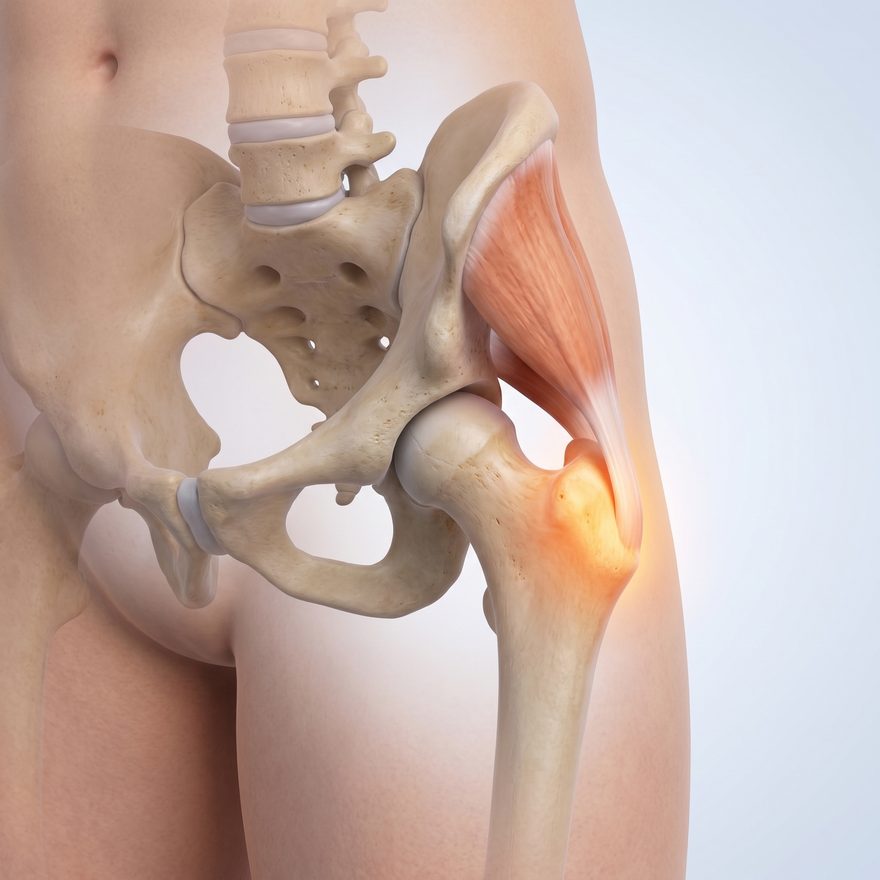
The pattern of pain depends on the cause, and it is common to have more than one.
Common symptoms
- Pain on the outer side of the hip, sometimes spreading down the outer thigh
- Pain when lying on the affected side at night
- Pain climbing stairs, standing on one leg or getting up from a low chair
- Groin pain and stiffness, with difficulty putting on socks or shoes
- Clicking, catching or a limp when walking
Where it hurts, and what it may mean
The location of the pain is a useful first clue:
- Outer hipMost often the gluteal tendons (greater trochanteric pain syndrome); tender to press, worse lying on that side.
- Groin and front of the hipOften the hip joint itself: osteoarthritis in older adults, or labral tears and impingement in younger, active people.
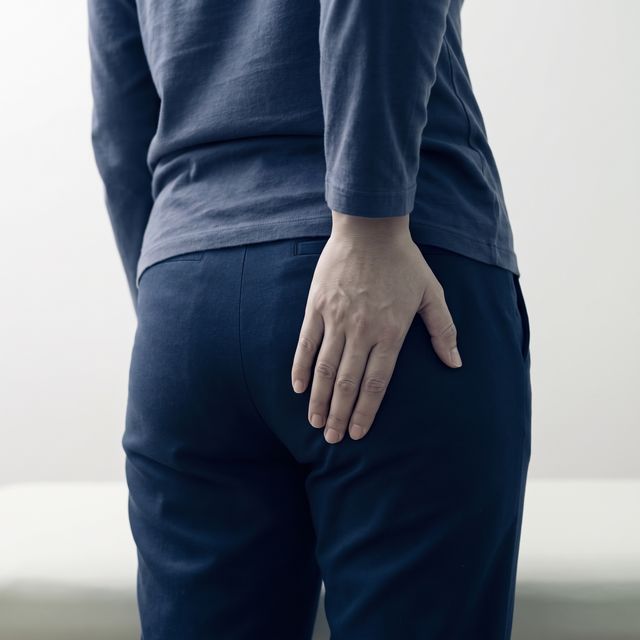
- Buttock and back of the hipOften referred from the lower back or the sacroiliac joint, or coming from the piriformis muscle.
Pain from the hip joint can also be felt in the thigh and the knee, so knee pain without a knee problem is a reason to have the hip checked.
Hip pain usually develops from a mix of load, age-related changes and the way the hip is used.
- A sudden increase in walking, running, stair climbing or hiking
- Being a woman over 40, especially around and after the menopause (for gluteal tendon pain)
- Habits that compress the outer hip: crossing the legs, standing with your weight on one hip, always sleeping on the same side
- Age-related changes in the hip joint, and previous hip injuries
- Higher body weight, and weakness of the hip muscles
- Lower back problems, which can cause pain felt in the hip or buttock
Pain on the outer side of the hip is common, especially in women aged 40 to 60, and most often comes from the gluteal tendons rather than from a bursa alone.
These checks can suggest where your hip pain is coming from. They can’t confirm a diagnosis. Hold on to a support, and stop if either causes sharp pain.
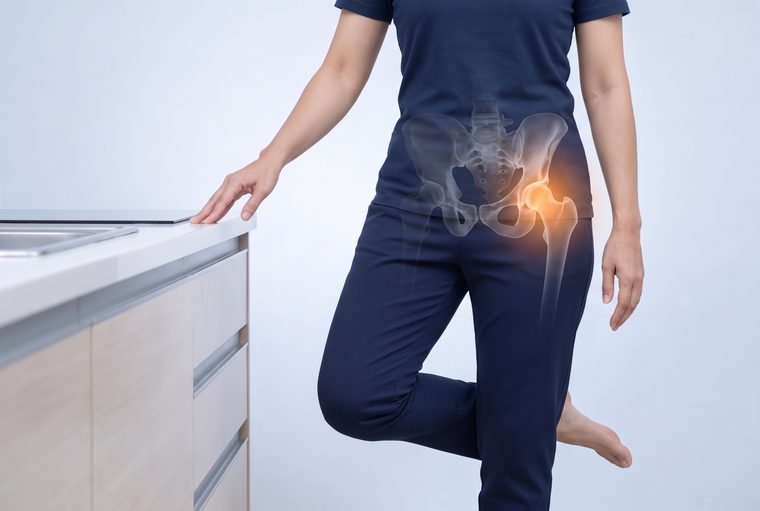
Single-leg stand check
Stand beside a counter, rest your fingertips on it for balance and lift the other foot. Try to stand on the painful leg for up to 30 seconds. Pain on the outer side of the hip during this time suggests the gluteal tendons are involved.
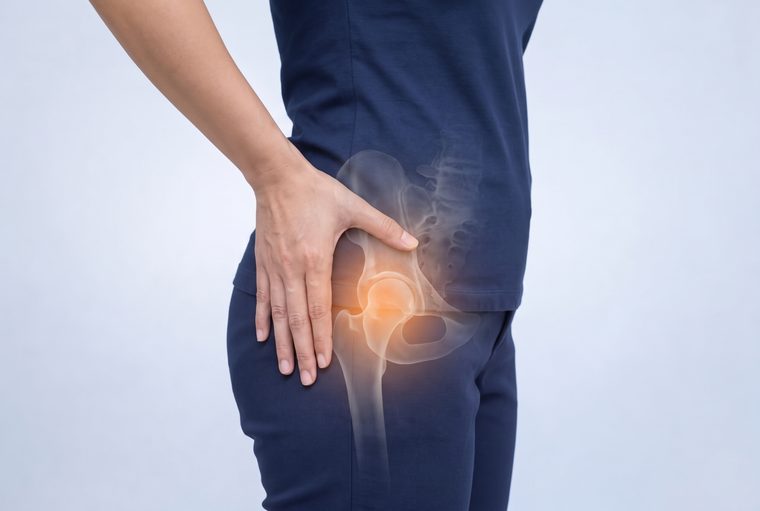
Outer hip press check
Lying on your good side or standing, press firmly with your fingertips on the bony point at the side of your hip, about a hand’s width below the waist. Clear tenderness that matches your usual pain points to the gluteal tendons. Pain felt deep in the groin instead points more to the hip joint.
Neither check rules out a joint problem or pain from the back. If you have groin pain, stiffness or a limp that doesn’t settle, have it assessed.
Several problems cause pain around the hip, and pain from the lower back is a common one.
Gluteal tendon pain (greater trochanteric pain syndrome)
- Where it usually hurts
- The outer side of the hip and thigh
- Other clues
- Tender on the bony point; worse lying on that side, on stairs and standing on one leg
Hip osteoarthritis
- Where it usually hurts
- The groin and front of the thigh, sometimes the knee
- Other clues
- Morning stiffness; difficulty with socks and shoes; usually over 50
Labral tear or hip impingement
- Where it usually hurts
- The groin
- Other clues
- Clicking, catching or a pinching pain when the hip bends deeply; often younger, active people
Pain from the lower back or sacroiliac joint
- Where it usually hurts
- The buttock and back of the hip, sometimes down the leg
- Other clues
- Back stiffness; changes with bending or sitting; tingling in the leg
A hip fracture after a fall, an infection in the joint and problems with the blood supply to the hip bone are less common, but need urgent medical care.
Further reading: Lower back pain, Knee pain.
Hip pain is diagnosed mainly from your history and a physical examination.
Your history: Where the pain is, how it started, what makes it worse, your activities and sleep, and your general health.
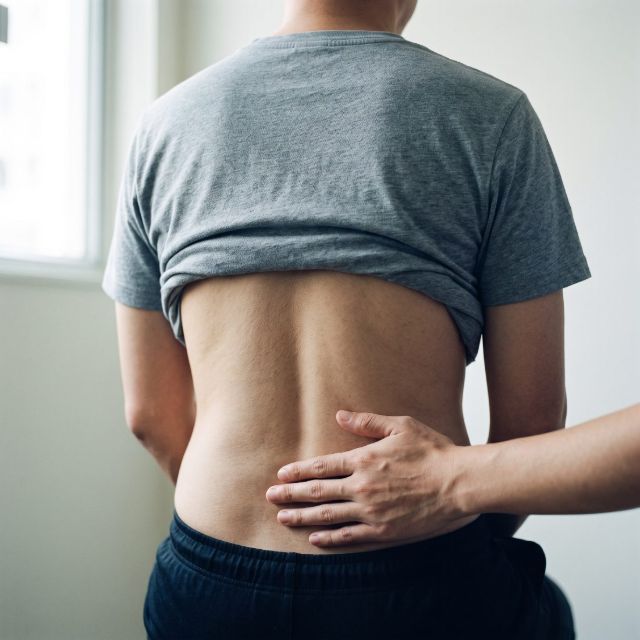
Physical examination: Checking how you walk and stand on one leg, the hip’s movement and strength, any tender areas, and your lower back.
Further tests: Not always needed. If arthritis, a tear, a fracture or another problem is suspected, Dr. Ho may recommend an X-ray, ultrasound or MRI scan, or refer you to an orthopaedic doctor.
Most hip pain improves without surgery. Treatment depends on the cause, but usually combines reducing irritating loads with progressive exercise.
Non-surgical treatment
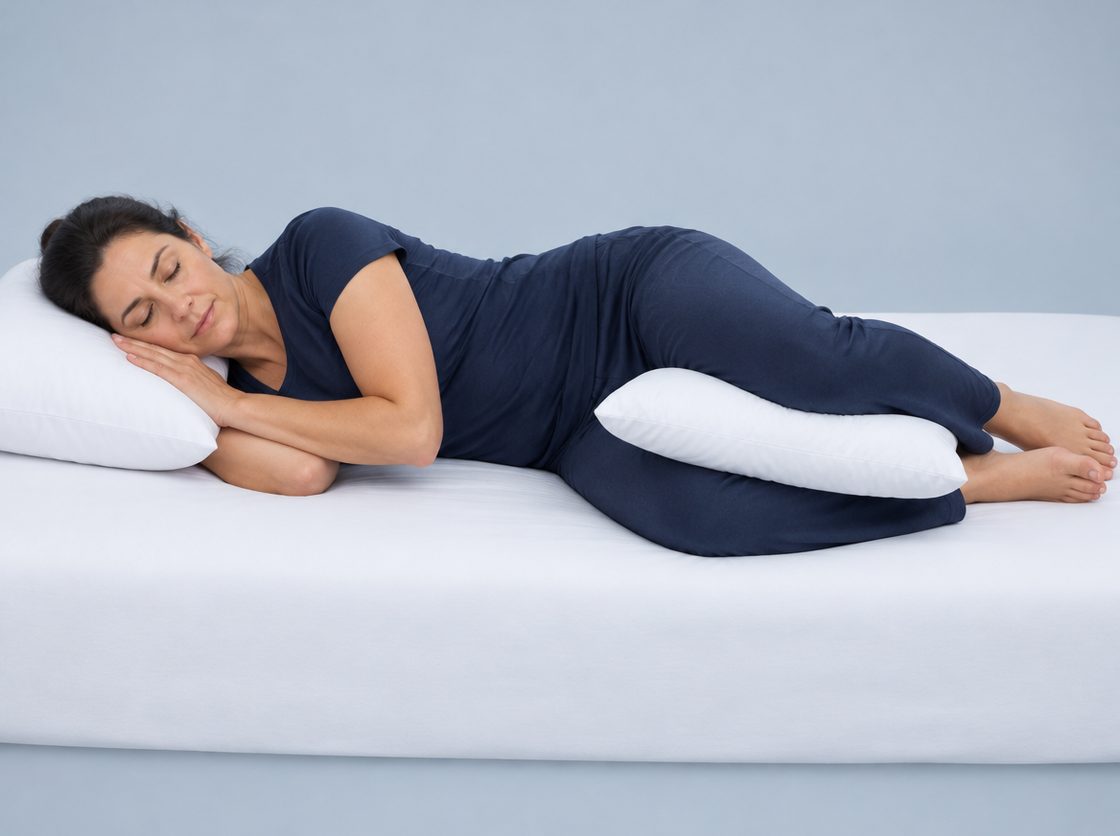
- Changing irritating habits: For outer hip pain: avoid crossing your legs, standing with your weight on one hip and lying on the painful side. A pillow between the knees helps when lying on the other side.
- Progressive strengthening: Exercises for the gluteal and thigh muscles, built up gradually. Exercise with advice on daily habits is a core treatment for gluteal tendon pain and for hip osteoarthritis.
- Shockwave therapy: Shockwave therapy may help some people with persistent gluteal tendon pain, alongside exercise.
- Hands-on treatment: Soft tissue work and mobilisation of the hip and lower back may ease pain and stiffness in the short term.
- Weight and activity management: Keeping active with lower-impact exercise such as swimming or cycling, and keeping to a healthy weight, reduce the load on the hip.
Treatment prescribed by a doctor
- Medication or an injection: Pain relief or anti-inflammatory medication may help in the short term. A steroid injection can ease outer hip or joint pain for a period, although its effect usually wears off.
Surgery
- Hip arthroscopy or replacement: Considered for advanced hip osteoarthritis that limits daily life, or for some labral or impingement problems that haven’t improved with other treatment.

Dr. Ho first checks whether a fracture, infection or other problem needs to be ruled out, works out whether the pain comes from the tendons, the joint or the back, and plans treatment based on the findings. General information only — your plan is set after an in-person assessment.
- 01
Assess
Checking your walking, the hip’s movement and strength, tender areas, and the lower back and sacroiliac joints.
- 02
Treat
Soft tissue care and joint mobilisation, shockwave therapy for persistent tendon pain where suitable, and advice on sleep and daily habits.
- 03
Rebuild
A progressive strengthening programme for the hip and thigh muscles, matched to your daily activities or sport.
- 04
Refer
If a fracture, infection, advanced arthritis or another medical cause is suspected, you will be referred for imaging or to an orthopaedic doctor.
Strong hip muscles and steady, gradual changes in activity help protect the hip.
- Strengthen your hip and thigh muscles with exercises such as side-lying leg lifts, bridges and sit-to-stands.
- Build up walking, running, hiking and stair climbing gradually.
- Avoid crossing your legs, and standing with your weight on one hip for long periods.
- When sleeping on your side, put a pillow between your knees.
- Keep to a healthy weight, and choose low-impact exercise if your hip is sensitive.
- Warm up before sport, and take breaks from long periods of sitting.
When to seek medical attention promptly
Seek medical attention promptly if any of the following apply:
- A fall followed by being unable to put weight on the leg, or a leg that looks shortened or turned out: go to A&E
- A hot, swollen, very painful hip, or a fever
- A child or teenager with hip pain, knee pain or a limp
- Sudden severe groin pain, especially with long-term steroid use or heavy drinking
- A history of cancer, unexplained weight loss, or constant pain at night
- Numbness or weakness in the leg, or problems controlling the bladder or bowels
Lying on the painful side presses the irritated gluteal tendons against the bony point of the hip. Lying on the other side with a pillow between your knees, or on your back, usually helps while the tendons settle.
Pain on the outer hip used to be called trochanteric bursitis, but it is now known that the gluteal tendons are usually the main problem, sometimes with an irritated bursa. That is why it is now called greater trochanteric pain syndrome, and why strengthening is the main treatment.
Pain in the groin, with stiffness and difficulty putting on socks, points to the hip joint. Pain in the buttock that changes with back movement, or comes with tingling in the leg, often comes from the back. An examination usually tells them apart, and it can be both.
Not usually. Keep active, but reduce the activities that clearly flare the pain for a while, such as long hill walks or running, and build them back up gradually alongside strengthening exercises.
Most people with hip pain don’t. A replacement is considered for advanced osteoarthritis when pain and stiffness seriously limit daily life despite good non-surgical care. An orthopaedic doctor can advise if that point is reached.
That depends on your policy terms. Cover for outpatient care, imaging, surgery and chiropractic treatment varies between policies, so check with your insurer before your visit. We are happy to provide receipts to support your claim.
Disclaimer
This page is general information only, not a diagnosis or treatment advice. If you have any symptoms, please consult a qualified healthcare professional.
Further reading
These public health pages cover the same condition in more depth.
- NHS: Hip pain in adults

Book a consultation with Dr. Ho, or message us on WhatsApp with any questions first.