Condition
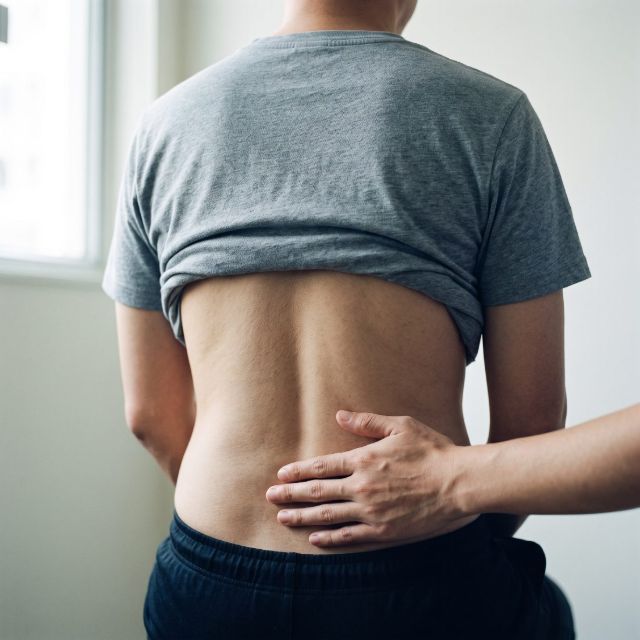
Dull, sharp, or radiating pain in the lumbar spine.
We’re closed right now. WhatsApp us and we’ll reply when we open.
- Registered Chiropractor 註冊脊醫
- Doctor of Chiropractic D’Youville College, USA
- Whampoa & Hung Hom Near Whampoa MTR
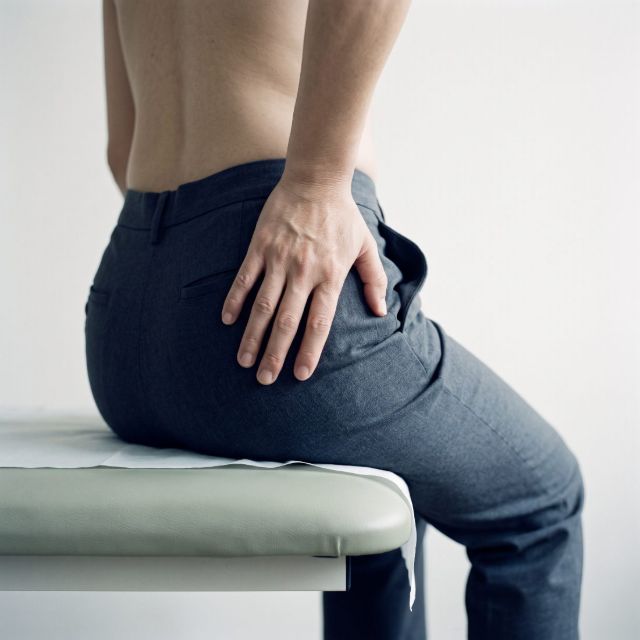
Lower back pain is pain, stiffness or muscle tension between the bottom of the ribs and the top of the legs. Most of it is mechanical, coming from the muscles, ligaments, joints or discs of the lower back rather than from a serious disease, and many cases settle within a few weeks by staying active, although it often comes back. Pain that spreads below the knee, or comes with numbness around the groin, a change in bladder or bowel control, fever or unexplained weight loss, needs prompt medical attention.
Key points
- Most lower back pain is mechanical: it changes with movement and position, and usually involves strained muscles and ligaments, the small joints of the spine or a disc.
- Pain that travels below the knee, especially with numbness or tingling, suggests an irritated nerve (sciatica) rather than back pain alone.
- Staying gently active usually helps more than bed rest. Treatment ranges from exercise and hands-on care to medication; surgery is rarely needed.
- Numbness around the groin or buttocks, new bladder or bowel problems, leg weakness, fever or unexplained weight loss need prompt medical attention.
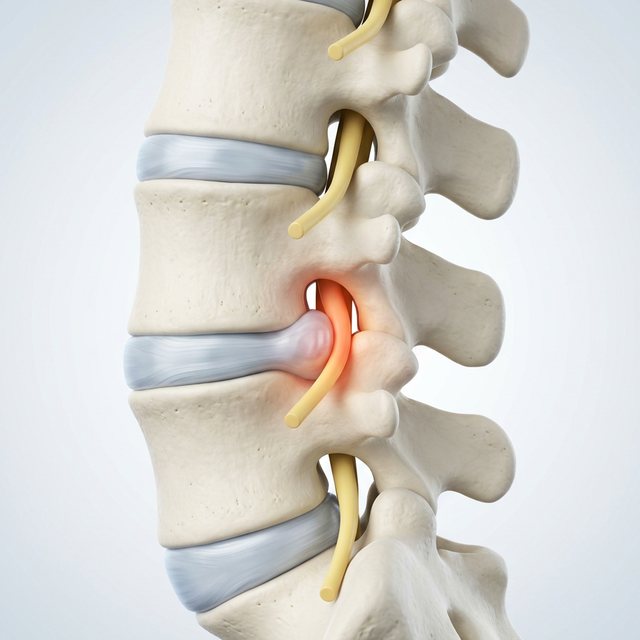
The lower back, or lumbar spine, is made up of five vertebrae stacked on the sacrum, the triangular bone at the back of the pelvis. Discs between the vertebrae absorb shock, and a pair of small facet joints at the back of each level guides movement. On each side, the sacrum meets the pelvis at the sacroiliac joint, and layers of muscles and ligaments hold it all together.
Most lower back pain is mechanical, also called non-specific: one or more of these structures is strained, irritated or overloaded, and the pain changes with how you move and sit. A small minority is caused by a specific problem such as a fracture, an infection, inflammatory arthritis or, rarely, a tumour. Part of an assessment is making sure your pain belongs to the first group. Pain doesn’t always mean damage: a strained back can be very painful, yet most people recover well.
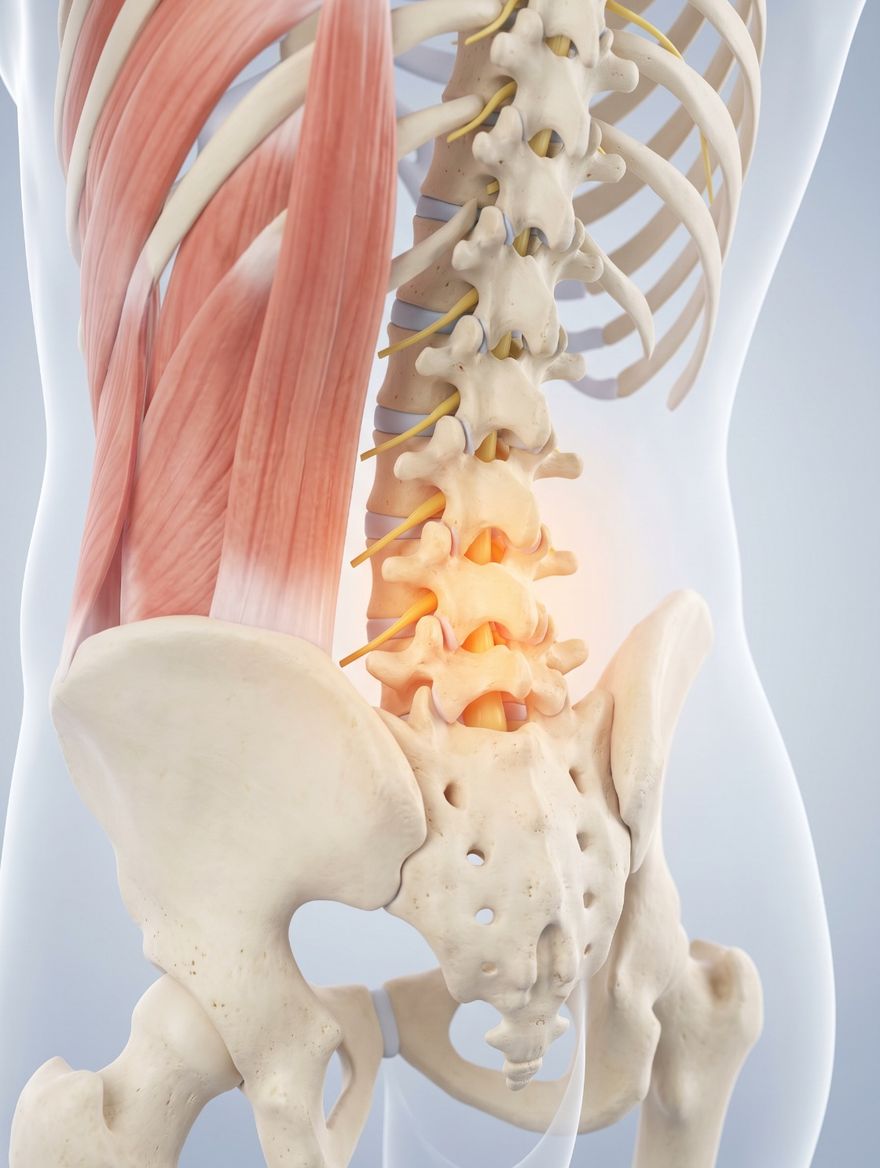
Lower back pain can start suddenly after lifting, bending or twisting, or build up over days of sitting and inactivity.
Common symptoms
- A dull ache or stiffness across the lower back, sometimes worse on one side
- Sharp pain when you bend, lift, twist or get up from a chair
- Muscle tightness or spasm that makes it hard to stand up straight
- Pain that eases when you change position and builds with long periods of sitting or standing
- Aching that spreads into the buttock or thigh, usually stopping above the knee
How long it lasts
Back pain is usually described by how long it has lasted:
- AcuteUp to about six weeks. Pain is often worst in the first few days, then eases as you get moving.
- SubacuteSix to twelve weeks. Pain that lingers this long is worth having assessed, to find what is keeping it going.
- PersistentOver twelve weeks. Stiffness, weak muscles, poor sleep and stress often keep the pain going, and a plan combining exercise with treatment usually helps.
Back pain often comes and goes, and one episode makes another more likely, so recovery usually includes exercises and changes to how you sit and lift.
Most lower back pain develops when the back is asked to do more than it is ready for, all at once or a little at a time.
- Muscle and ligament strain from lifting, bending or twisting, especially with a heavy load held away from your body
- Irritated facet joints, which often hurt more when you lean backwards or stand for a long time
- Disc problems, such as a bulging or herniated disc, which often hurt more with sitting and bending and may irritate a nerve (see Herniated disc)
- Sacroiliac joint pain, low down on one side, which is common in pregnancy and after a fall onto the buttock
- Long hours sitting at a desk, in a car or on the phone, with few breaks
- Low fitness, weak trunk and hip muscles, being overweight, smoking, poor sleep and stress
Most adults have lower back pain at some point. Wear-related changes on scans are also common from the age of 30, and often cause no pain at all.
These two simple checks can give a first indication of what kind of back pain you have, but they cannot confirm a diagnosis. Move slowly, and stop if anything causes sharp or spreading pain.
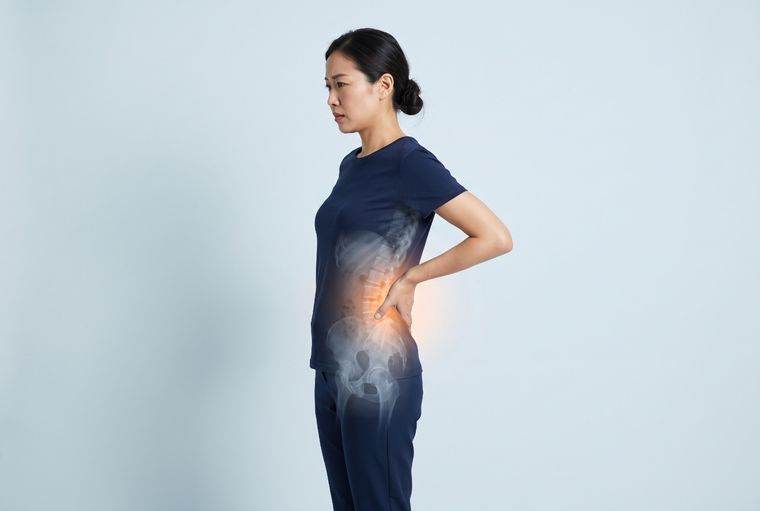
Does it change with position or movement?
Notice how your back feels when you sit, stand, walk, bend forward and gently lean back. Pain that eases with some positions and builds with others fits a mechanical pattern. Pain that stays the same whatever you do, or is worse at night when you are still, is less typical and should be checked.
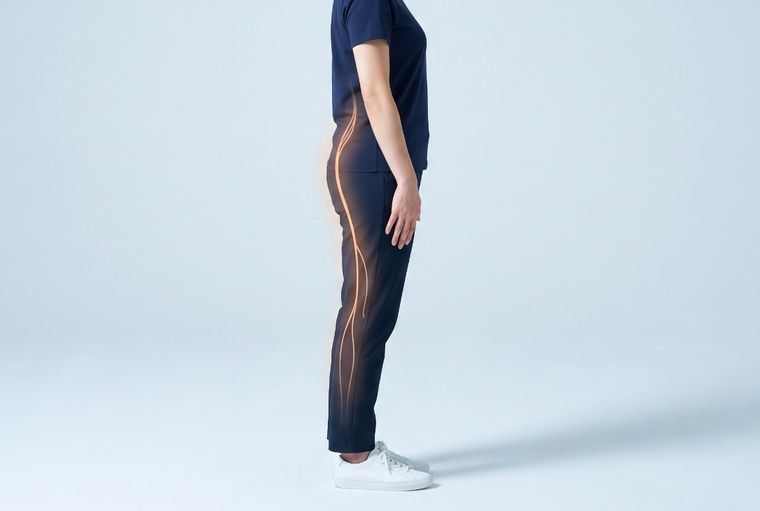
Does the pain travel below the knee?
Pain that stays in the back, or spreads into the buttock or thigh, is common with mechanical back pain. Pain that runs below the knee into the calf or foot, especially with numbness, tingling or weakness, suggests an irritated nerve: see Sciatica.
These checks can’t rule other causes in or out. If pain keeps coming back, lasts more than a few weeks or affects your work or sleep, have it properly assessed by a healthcare professional.
Several problems can cause pain in or near the lower back. Finding where the pain is coming from is the key to choosing the right treatment.
Mechanical lower back pain (muscles, joints and discs of the lumbar spine)
- Where it usually hurts
- Across the lower back, on one or both sides; may spread into the buttock or thigh
- Other clues
- Changes with movement and position; often starts after lifting, bending or long sitting
Sacroiliac joint pain
- Where it usually hurts
- Low down on one side, over the dimple at the back of the pelvis; may spread into the buttock or groin
- Other clues
- Often worse standing on one leg, on stairs or turning over in bed; common in pregnancy
Hip joint problems
- Where it usually hurts
- Mainly the groin or the front of the thigh, sometimes the buttock
- Other clues
- Pain and stiffness putting on socks or getting out of a car; you may limp
Kidney problems (such as an infection or a stone)
- Where it usually hurts
- Deep in the side, just below the ribs, rather than in the middle of the back
- Other clues
- Constant pain that doesn’t change with movement; fever, or pain or burning when you pass urine. See a doctor promptly
Further reading: Sciatica, Hip pain, Upper back pain.
Diagnosis relies mainly on your history and a physical examination. Most people with back pain don’t need an X-ray or MRI scan.
Your history: When and how the pain started, where you feel it, what eases or worsens it, and your work and exercise habits, with questions to check for warning signs.
Physical examination: Checking how your lower back and hips move, pressing over the joints and muscles, and testing the strength, reflexes and sensation in your legs.
Further tests: Scans help only in some cases, such as a suspected fracture, infection or severe nerve compression, or when surgery is being considered. If needed, Dr. Ho will refer you for an X-ray or MRI scan, or to an orthopaedic doctor.
Most people improve with non-surgical treatment. Treatment usually aims to ease the pain enough to keep you moving, then rebuild strength so it is less likely to come back.
Non-surgical treatment
- Staying active: Keeping up your daily activities as far as you can, with short rests, rather than bed rest. Gentle walking is usually a good start.
- Heat or ice: Heat may ease stiffness and spasm; an ice pack wrapped in a towel may help in the first few days after a strain.
- Exercise and rehabilitation: Exercises that restore movement and strengthen the trunk and hips, built up gradually under guidance. Exercise is widely recommended as a core part of treatment.
- Spinal manipulation and mobilisation: Hands-on treatment to the joints of the lower back, an option in treatment guidelines alongside exercise, which may help ease pain and stiffness for some people.
- Soft tissue treatment: Releasing tight muscles in the back and hips, which may ease pain in the short term.
- Cox flexion-distraction (spinal decompression): A gentle, rhythmic technique on a special table, often considered for disc-related back and leg pain.
Treatment prescribed by a doctor
- Medication or injections: Anti-inflammatory painkillers may ease pain in the short term, but don’t suit everyone, so check with a doctor or pharmacist; paracetamol on its own is not generally recommended for back pain. For some long-term back pain, a doctor may suggest an injection or a procedure to numb the nerves to the facet joints.
Surgery
- Spinal surgery: Rarely needed for back pain alone. It may be considered for specific problems, such as a herniated disc with severe or worsening leg symptoms, spinal stenosis or a fracture, usually after non-surgical treatment has been tried.

Dr. Ho first finds what is causing your back pain, then plans treatment based on the findings. General information only — your plan is set after an in-person assessment.
- 01
Assess
Examining how your lower back, pelvis and hips move and testing the nerves to your legs, to find the source of the pain and check for anything that needs a doctor’s attention.
- 02
Treat
Hands-on adjustment and soft tissue work where appropriate, with Cox flexion-distraction (spinal decompression) for disc-related pain.
- 03
Exercise and habits
A progressive exercise programme for the trunk and hips, with advice on lifting, sitting, sleeping and keeping active at work.
- 04
Refer
If there are warning signs, pain doesn’t improve, or a scan, medication or a surgical opinion may be needed, you will be referred to a doctor or for imaging.
Small, regular habits do more for the lower back than occasional big efforts.
- Break up sitting every 30 to 60 minutes, even just to stand and walk for a minute or two.
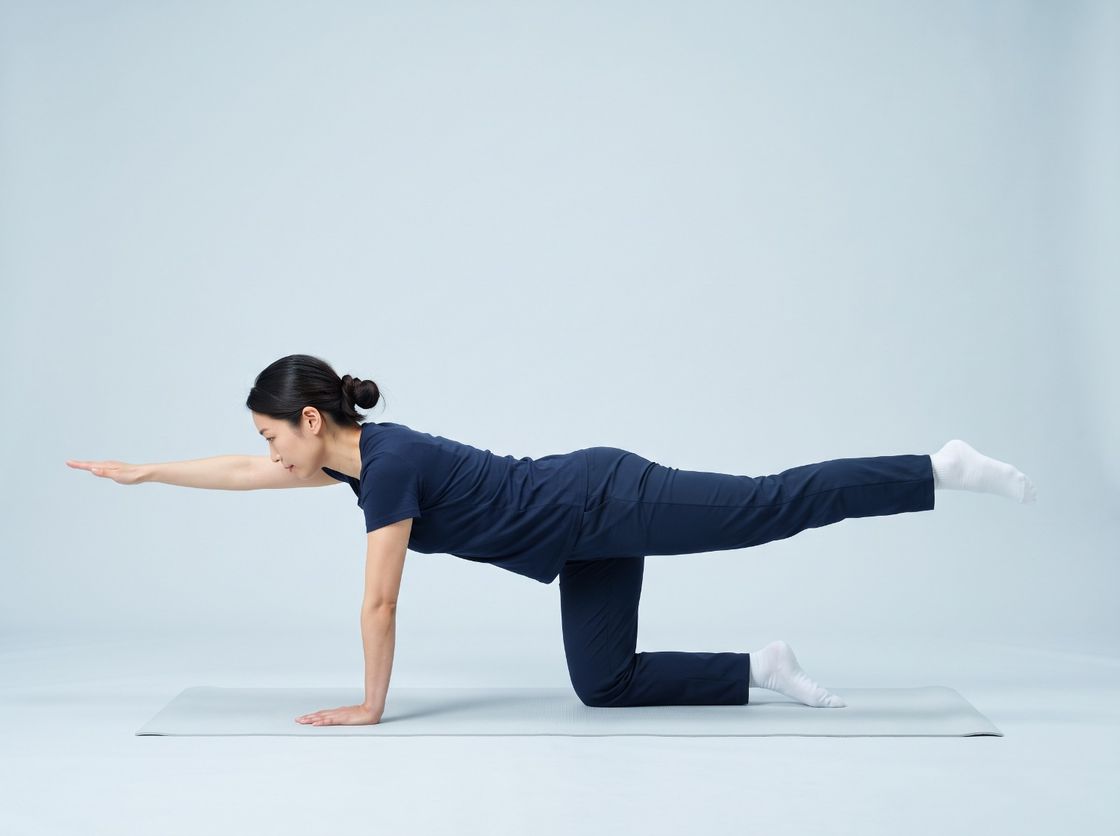
- Exercise regularly: walking, swimming, yoga and pilates may all help, and trunk and hip exercises such as the bird dog help support the spine.
- Lift with the load close to your body, bend at your hips and knees rather than your waist, and don’t twist as you lift.
- At your desk, keep your feet flat and the screen at eye level, with a small cushion behind your lower back if it helps.
- Carry shopping in both hands, or use a trolley or a backpack.
- Sleep on your side with a pillow between your knees, or on your back with a pillow under your knees.
- When your back flares up, ease off what provokes it rather than stopping everything, then build back up gradually.
When to seek medical attention promptly
Seek medical attention promptly if any of the following apply:
- Numbness or tingling around the buttocks, genitals or inner thighs (go to A&E immediately)
- New difficulty passing urine, or loss of bladder or bowel control (go to A&E immediately)
- Weakness, numbness or tingling in both legs, or weakness in one leg that is getting worse
- Back pain after a significant fall or accident, or after a minor fall if you have osteoporosis
- Back pain with a fever, chills or feeling generally unwell
- Unexplained weight loss, or a past history of cancer
- Constant pain that doesn’t ease with rest or changing position, or is worse at night
Use whichever feels better. Heat tends to ease stiffness and muscle spasm, and ice may help in the first few days after a strain. Use either for 15 to 20 minutes at a time, wrapped in a towel, and avoid areas that feel numb.
Usually not. Most back pain can be diagnosed from your history and an examination, and scans often show wear-related changes that are just as common in people without pain. A scan may be needed if there are warning signs, nerve symptoms are severe or worsening, or surgery is being considered.
Many people improve within a few weeks, but it can last longer or keep coming back. Pain that lasts more than a few weeks, keeps returning or affects your work or sleep is worth having assessed.
Keep moving as much as you comfortably can; more than a day or two of bed rest tends to slow recovery. Ease off the movements that clearly make it worse, and build back up to your normal activities gradually.
Sit back in the chair with your feet flat, your hips level with or slightly above your knees, and the backrest or a small cushion supporting your lower back. Most importantly, get up and move every 30 to 60 minutes: no chair is good enough to sit in all day.
That depends on your policy terms. Cover for outpatient care and chiropractic treatment varies between policies, so check with your insurer before your visit. We are happy to provide receipts to support your claim.
Disclaimer
This page is general information only, not a diagnosis or treatment advice. If you have any symptoms, please consult a qualified healthcare professional.
Treatment
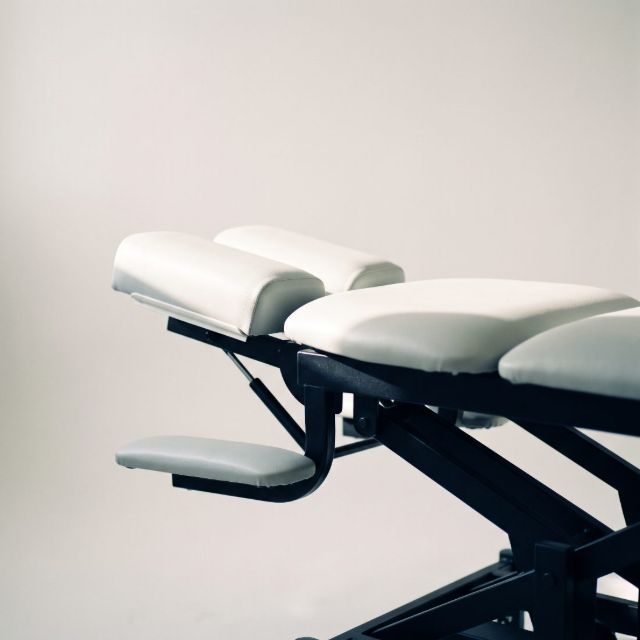
Spinal Decompression
Gentle, controlled traction using a Cox flexion/distraction table to relieve pressure on the spine and discs.Read more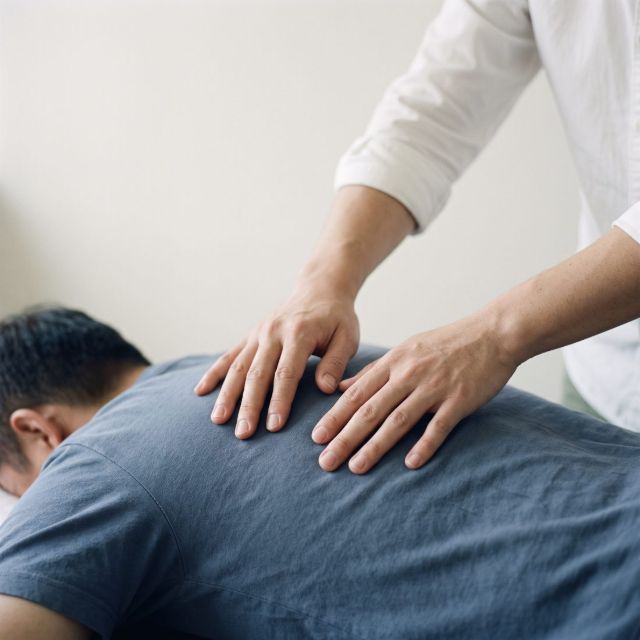
Chiropractic Spinal Adjustments
Hands-on, targeted adjustment of spinal and joint restrictions to help restore normal movement.Read more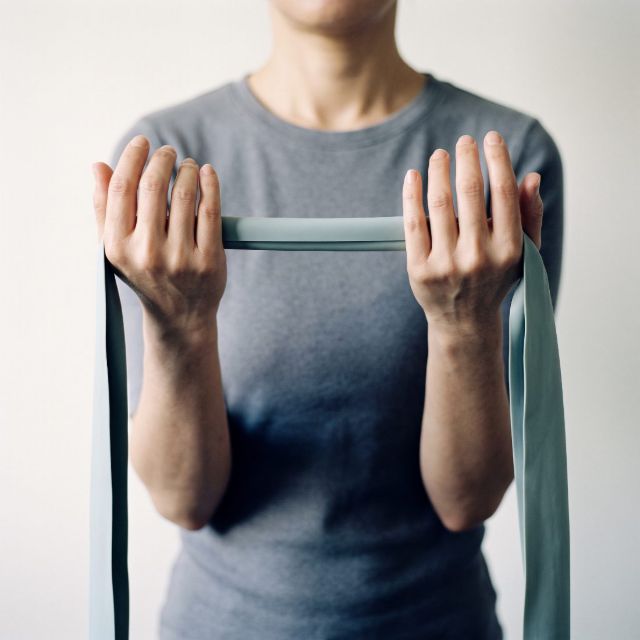
Rehabilitation
Guided exercises to rebuild strength, stability, and mobility, and help reduce the chance of recurrence.Read more
Book a consultation with Dr. Ho, or message us on WhatsApp with any questions first.