Condition
Deep buttock pain that can spread down the back of the leg.
We’re closed right now. WhatsApp us and we’ll reply when we open.
- Registered Chiropractor 註冊脊醫
- Doctor of Chiropractic D’Youville College, USA
- Whampoa & Hung Hom Near Whampoa MTR
Piriformis syndrome is buttock pain thought to come from the piriformis muscle, deep in the buttock, irritating the nearby sciatic nerve. The pain may spread down the back of the thigh and is often worse with sitting. It is a debated diagnosis and much less common than sciatica from the lower back, so the back is always checked first. Most people improve with changes to sitting and a programme of stretching and strengthening. Worsening leg weakness or loss of bladder control needs urgent medical care.
Key points
- Piriformis syndrome causes deep buttock pain that is often worse with sitting.
- Sciatica from the lower back is far more common and can feel similar, so the back is checked first.
- Changes to sitting, stretching and hip strengthening help most people.
- Worsening leg weakness, or numbness around the groin with bladder problems, needs urgent care.
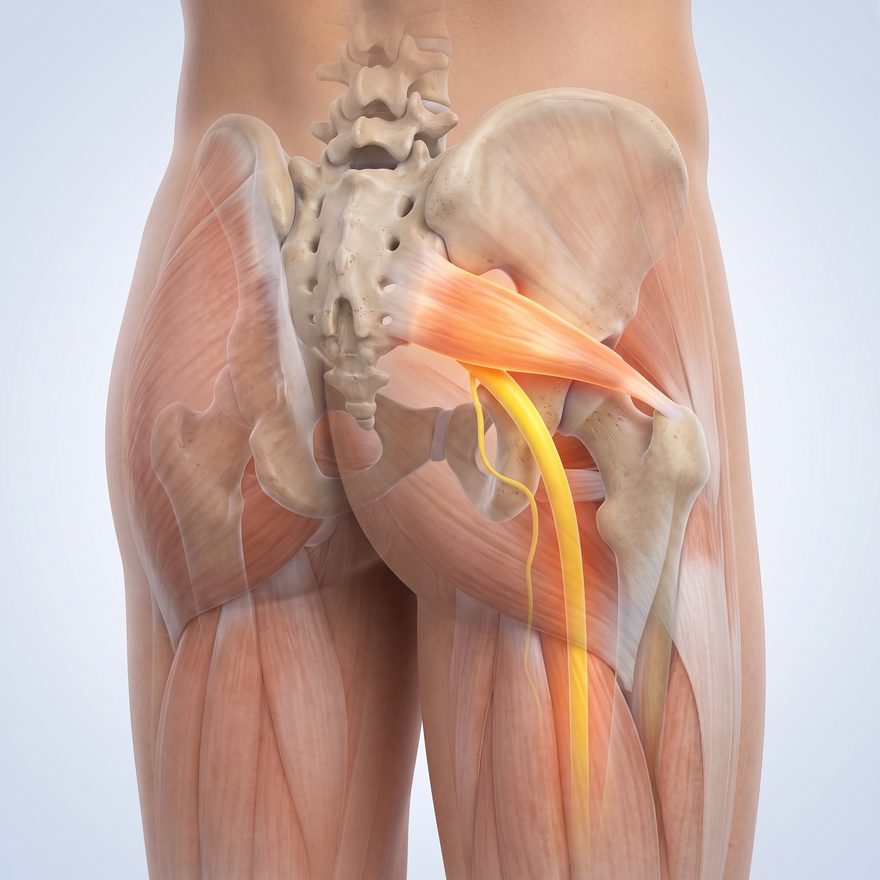
The piriformis is a small, pear-shaped muscle deep in the buttock. It runs from the base of the spine, the sacrum, to the top of the thigh bone, and helps turn the hip outwards and steady the pelvis. The sciatic nerve, the largest nerve in the body, passes just beneath it on its way down the back of the leg, and in some people runs through the muscle.
In piriformis syndrome, the muscle is thought to irritate or press on the sciatic nerve, causing buttock pain that may spread down the leg. The diagnosis is debated, because the evidence is limited and other deep buttock muscles can be involved, and many doctors now use the term deep gluteal syndrome. It is much less common than sciatica caused by the lower back.
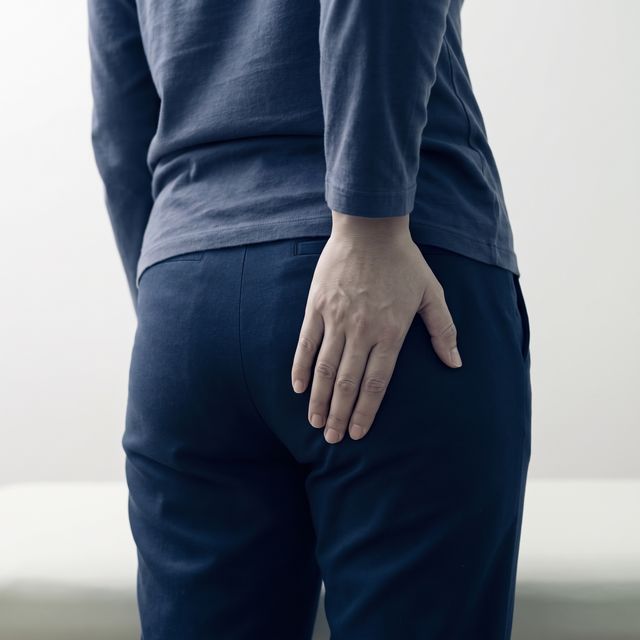
Symptoms are mostly felt in the buttock, and are often worse with sitting.
Common symptoms
- A deep ache in one buttock
- Pain, tingling or numbness spreading down the back of the thigh
- Pain when sitting for long periods, especially on a hard seat
- Pain climbing stairs, getting up from sitting or crossing the legs
- Tenderness deep in the buttock, with little or no lower back pain
When it tends to hurt
The pain often follows a recognisable pattern:
- SittingPain builds up with sitting, especially on a hard seat or on a wallet in the back pocket, and eases when you stand or walk.
- MovementPain may come on with running, climbing stairs or hills, or getting up from a chair.
- PressurePressing deep in the middle of the buttock often brings on the familiar pain.
Sciatica from the lower back is far more common than piriformis syndrome and can feel very similar, so the back is always checked first.
Piriformis syndrome is thought to occur when the piriformis or nearby deep buttock muscles irritate the sciatic nerve. Its causes are not fully understood.
- Sitting for long periods, especially on hard seats or on a wallet in the back pocket
- A fall onto the buttock, or a direct blow to it
- Overuse from running, cycling or sports with repeated hip twisting
- A sudden increase in training, such as hill running or stair climbing
- Weakness of the hip muscles, which may increase the load on the deep rotator muscles
- Natural variation in how the sciatic nerve passes the piriformis muscle
Piriformis syndrome is a debated diagnosis. The broader term deep gluteal syndrome is now often used, because the sciatic nerve can be irritated by several structures deep in the buttock, not only the piriformis.
These checks can suggest whether the deep buttock is involved. They can’t confirm a diagnosis or rule out a problem in the back. Stop if either causes sharp or shooting pain.
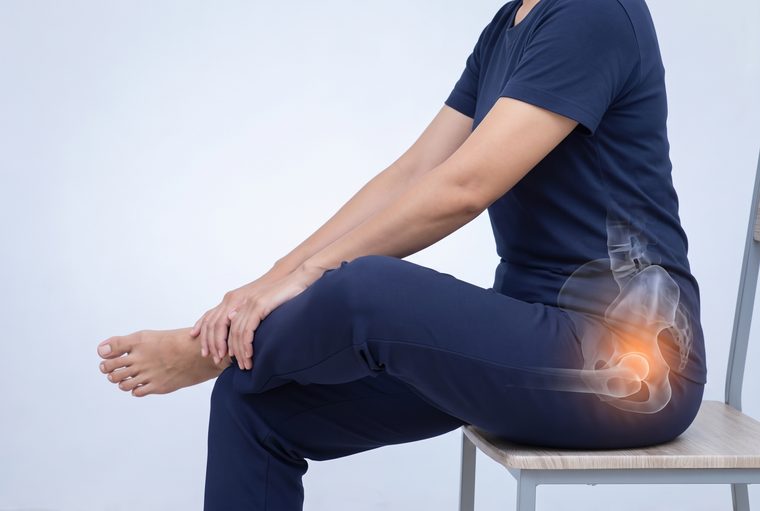
Seated figure-4 check
Sit on a chair, rest the ankle of the painful leg on the opposite knee, and lean gently forward with a straight back. A familiar deep buttock pain, rather than a pull at the back of the thigh, suggests the piriformis area may be involved. Stop if pain shoots down the leg.
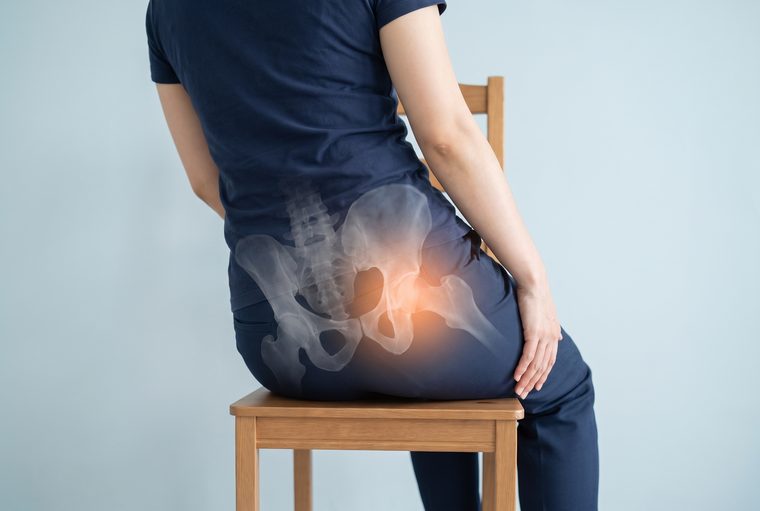
Sitting pressure check
Sit on a firm chair and notice whether sitting on the painful side brings on the familiar pain, and whether it eases when you shift your weight onto the other buttock or stand up. Pain that is clearly worse with pressure on the buttock suggests the deep buttock is involved. Pain that is worse with bending forward or coughing points more to the back.
If you have back pain, symptoms below the knee, or numbness or weakness in the leg, a back problem is more likely and needs an assessment.
Several problems cause pain in the buttock and down the leg, and they often need different treatment.
Piriformis syndrome (deep gluteal syndrome)
- Where it usually hurts
- Deep in one buttock, sometimes down the back of the thigh
- Other clues
- Worse with sitting and pressure on the buttock; tender deep in the buttock; little back pain
Sciatica from the lower back
- Where it usually hurts
- From the lower back or buttock down the leg, often below the knee
- Other clues
- Back pain or stiffness; worse with bending, sitting or coughing; numbness in the foot
Sacroiliac joint pain
- Where it usually hurts
- Low in the back, over one side of the pelvis
- Other clues
- Pain near the dimple at the back of the pelvis; worse rolling over in bed or standing on one leg
Hamstring tendon pain
- Where it usually hurts
- The sitting bone at the bottom of the buttock
- Other clues
- Worse sitting on a hard seat, sprinting or lunging; common in runners
Hip joint problems and, rarely, blood vessel or nerve problems can also cause buttock pain, so the examination looks at the back, pelvis and hip together.
Further reading: Sciatica, Herniated disc.
There is no single test for piriformis syndrome. It is diagnosed from your history and examination, after other causes, especially the lower back, have been considered.
Your history: Where you feel the pain, what brings it on, how sitting affects it, your activities and sports, and any back pain.
Physical examination: Checking the lower back, sacroiliac joints and hip, nerve function in the legs, and tenderness and stretch tests for the deep buttock muscles.
Further tests: Not always needed. If a disc or nerve problem in the back is suspected, or symptoms don’t improve, Dr. Ho may recommend an MRI scan, or refer you to a doctor.
Most people improve with non-surgical care, which aims to reduce irritation of the nerve and build up the hip muscles.
Non-surgical treatment
- Sitting changes: Taking regular breaks from sitting, using a cushion, and not keeping a wallet in your back pocket may reduce pressure on the buttock.
- Stretching and strengthening: Gentle stretches for the deep buttock muscles, nerve gliding exercises, and progressive strengthening for the gluteal and hip muscles.
- Soft tissue care: Soft tissue work for the deep buttock muscles may ease tension and pain in the short term.
- Shockwave therapy: Alongside exercise, shockwave therapy may help some people with persistent deep buttock muscle pain, although the evidence is limited.
- Joint care for the back and pelvis: Where the lower back or sacroiliac joint is also involved, gentle mobilisation or adjustments may help.
Treatment prescribed by a doctor
- Medication or an injection: Pain relief or anti-inflammatory medication may help in the short term. For persistent pain, a doctor may suggest an injection into the piriformis muscle, sometimes guided by ultrasound.
Surgery
- Surgical release: Rarely needed. It is considered only for severe, long-lasting symptoms that haven’t improved with other treatment, after other causes have been ruled out.

Dr. Ho first checks whether your symptoms come from the lower back, the sacroiliac joint, the hip or the deep buttock, and looks for signs that need medical care, then plans treatment based on the findings. General information only — your plan is set after an in-person assessment.
- 01
Assess
Checking the lower back, pelvis and hip, nerve function in the legs, and the deep buttock muscles.
- 02
Treat
Soft tissue care for the deep buttock muscles, gentle mobilisation of the back and pelvis where suitable, and shockwave therapy where appropriate.
- 03
Rebuild
Stretching, nerve gliding and progressive hip strengthening, with advice on sitting and training.
- 04
Refer
If a disc problem, nerve damage, a blood clot or another medical cause is suspected, you will be referred for imaging or to a doctor.
These habits may reduce strain on the deep buttock muscles and the sciatic nerve.
- Get up and move at least every 30 to 45 minutes when sitting.
- Don’t sit on a wallet or phone in your back pocket.
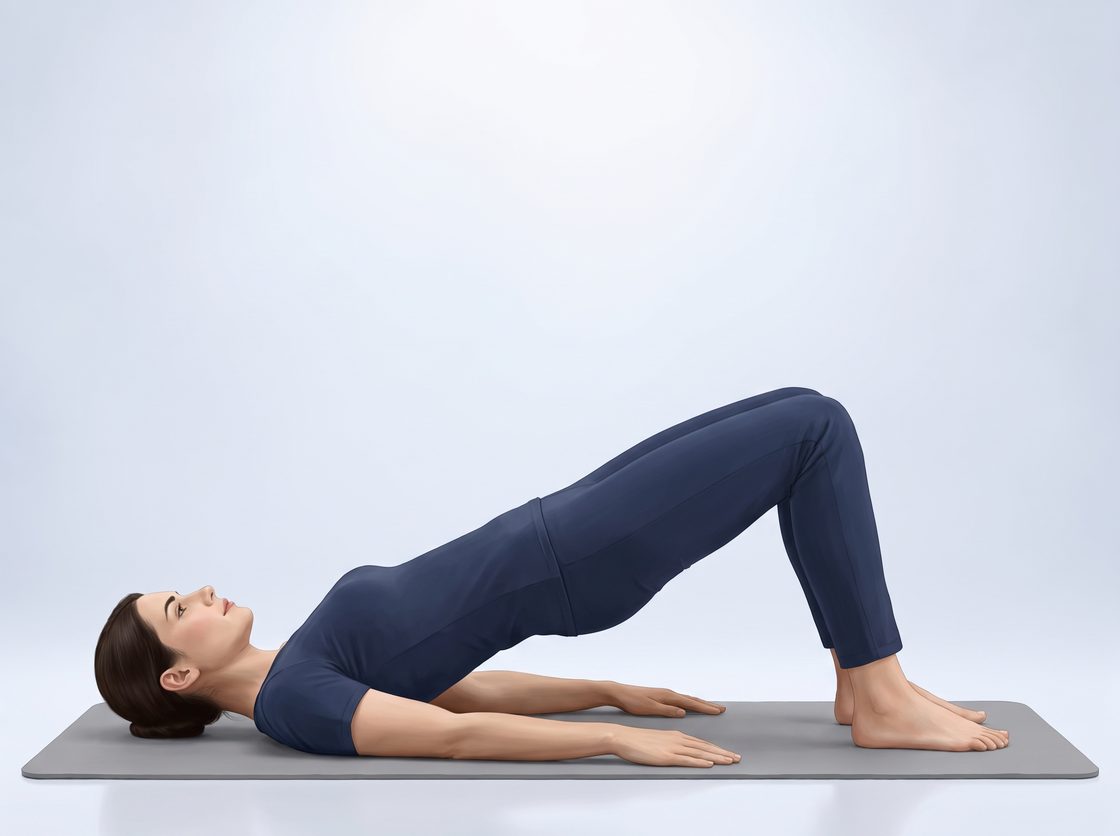
- Strengthen your gluteal and hip muscles with exercises such as bridges and side-lying leg lifts.
- Build up running, cycling, and hill or stair training gradually.
- Warm up before sport, and stretch your hips afterwards.
- Use a cushion on hard seats if sitting is uncomfortable.
When to seek medical attention promptly
Seek medical attention promptly if any of the following apply:
- Numbness around the groin or buttocks, or new problems controlling the bladder or bowels: go to A&E
- Weakness in the leg or foot that is getting worse, or a foot that drops
- Calf pain, swelling, warmth or redness, especially after a long flight or surgery
- A fever, a history of cancer, or unexplained weight loss
- Severe pain after a fall or injury
- Constant pain at night that doesn’t change with position
Not quite. Sciatica describes pain along the sciatic nerve, and it most often comes from a disc or bone spur in the lower back. Piriformis syndrome is one less common cause, where the nerve is thought to be irritated deep in the buttock instead.
It varies. Many people improve over several weeks with changes to sitting and a regular exercise programme, but longer-standing symptoms can take a few months.
Some people find gentle pressure with a ball eases the muscle, but avoid pressing hard on a spot that sends pain or tingling down the leg, as this may irritate the nerve.
Often yes, at a level that doesn’t flare your symptoms. Reducing hills, speed work and distance for a while, then building back gradually alongside hip strengthening, usually works better than stopping completely.
Not usually at first. An MRI scan is mainly used when a back problem is suspected, or when symptoms don’t improve as expected.
That depends on your policy terms. Cover for outpatient care, imaging, surgery and chiropractic treatment varies between policies, so check with your insurer before your visit. We are happy to provide receipts to support your claim.
Disclaimer
This page is general information only, not a diagnosis or treatment advice. If you have any symptoms, please consult a qualified healthcare professional.
Book a consultation with Dr. Ho, or message us on WhatsApp with any questions first.