Condition
Pain when lifting or reaching, often from the rotator cuff tendons.
We’re closed right now. WhatsApp us and we’ll reply when we open.

- Registered Chiropractor 註冊脊醫
- Doctor of Chiropractic D’Youville College, USA
- Whampoa & Hung Hom Near Whampoa MTR
Shoulder pain is one of the most common joint problems in adults. Most of it comes from the rotator cuff, a group of four muscles and tendons that hold the ball of the shoulder in its socket and help lift and turn the arm. Pain when lifting the arm, reaching overhead or behind your back, or lying on the shoulder at night is typical. Most rotator cuff pain improves with the right exercises and changes to how you load the shoulder, although it can take several weeks to months. Pain after a fall, or a shoulder you suddenly can’t lift, should be checked promptly.
Key points
- Most shoulder pain comes from the rotator cuff tendons and the space beneath the bony tip of the shoulder.
- Pain when lifting the arm out to the side or overhead, and when lying on that shoulder, is typical.
- Exercise is the main treatment for rotator cuff pain; hands-on treatment and shockwave therapy may help some people.
- A shoulder that suddenly can’t be lifted after an injury, or shoulder pain with chest symptoms, needs prompt attention.
The shoulder is a ball-and-socket joint with a shallow socket, which lets the arm move in almost every direction. That freedom depends on the rotator cuff: four muscles whose tendons wrap around the top of the upper arm bone and keep it centred in the socket. Above them lies the acromion, the bony tip of the shoulder, with a fluid-filled sac called the bursa in between.
Rotator cuff related shoulder pain covers several overlapping problems: an overloaded, irritated tendon (tendinopathy), pain in the space beneath the acromion when the arm is raised (often called impingement), an inflamed bursa, calcium deposits in a tendon (calcific tendinopathy), and partial or full-thickness tears, which become more common with age. Other causes of shoulder pain include frozen shoulder, arthritis, problems with the small joint at the top of the shoulder (the AC joint), and pain referred from the neck.

Rotator cuff pain usually builds up gradually, but it can also start after a fall or a sudden lift.
Common symptoms
- Pain at the front or outer side of the shoulder, sometimes spreading down the outer upper arm
- Pain when lifting the arm out to the side or overhead, especially between shoulder and head height
- Pain when reaching behind your back, for example to tuck in a shirt or fasten a bra
- Pain at night, especially when lying on the affected shoulder
- Weakness when lifting the arm or turning it outwards
How it usually progresses
With the right care, rotator cuff pain often follows this course:
- Early weeksPain flares easily and sleep may be disturbed. Easing the load, while keeping the shoulder moving, helps it settle.
- Weeks 2 to 12Strengthening exercises are built up gradually. Pain usually eases as the tendon tolerates more load.
- 3 to 6 monthsMost people improve substantially, although some need longer, especially with calcific tendinopathy or a tear.
Unlike frozen shoulder, rotator cuff pain usually leaves the shoulder able to move fully when someone else lifts your arm for you; it is painful rather than truly stiff.
Rotator cuff problems usually develop when the load on the tendons is more than they are ready for, often together with age-related changes.
- Repeated overhead work or sport, such as painting, swimming, tennis or badminton
- A sudden increase in lifting, training or a new activity
- Age: rotator cuff tendon changes and tears become more common after 40
- A fall onto the arm or shoulder, or a sudden heavy lift
- Weakness or poor control of the muscles around the shoulder blade
- Diabetes, smoking and high cholesterol, which may affect tendon health
Rotator cuff tears become common with age, and many people with a tear on a scan have no pain at all.
These two checks can suggest a rotator cuff problem, but they can’t confirm a diagnosis. Stop if either causes sharp pain.

Painful arc check
Stand and slowly raise your arm out to the side and up above your head, then lower it slowly. Pain mainly in the middle of the movement, roughly between shoulder and head height, that eases as the arm goes higher, is a positive result and points to the rotator cuff.

Resisted outward-turn check
Stand with your elbow tucked in at your side and bent to 90 degrees, thumb up. Push the back of your hand outwards against your other hand, which holds it still, for a few seconds. Pain at the shoulder, or clear weakness compared with the other side, is a positive result.
A positive result doesn’t confirm a rotator cuff problem, and a negative one doesn’t rule it out. If you can’t lift your arm at all, or it became weak suddenly after an injury, have it checked promptly.
Several conditions cause shoulder pain. Telling them apart helps choose the right treatment.
Rotator cuff related pain
- Where it usually hurts
- The front or outer side of the shoulder and upper arm
- Other clues
- A painful arc when lifting; pain lying on the shoulder; full movement when someone else lifts the arm
Frozen shoulder
- Where it usually hurts
- Deep in the shoulder
- Other clues
- Stiff in every direction, even when someone else tries to move the arm; most common between 40 and 60 and in people with diabetes
Pain referred from the neck
- Where it usually hurts
- The top of the shoulder, the shoulder blade or down the arm
- Other clues
- Neck stiffness; tingling or numbness in the arm or hand; changes with neck movement
AC joint problems
- Where it usually hurts
- The very top of the shoulder
- Other clues
- Pain when reaching across the body; often after a fall onto the shoulder
Heart problems
- Where it usually hurts
- The left shoulder or arm, often with chest pain
- Other clues
- Breathlessness, sweating, or pain with exertion; call 999
A full-thickness rotator cuff tear, especially after an injury, may need a surgical opinion, so sudden weakness should be assessed early.
Further reading: Frozen shoulder, Neck pain.
Shoulder pain is diagnosed mainly from your history and a physical examination.
Your history: How the pain started, which movements are painful, your work, sport and sleep, and any injury.
Physical examination: Checking how the shoulder moves on its own and when moved for you, the strength of the rotator cuff, the shoulder blade and the neck.
Further tests: Not always needed. If a tear, calcific tendinopathy or another problem is suspected, Dr. Ho may recommend an ultrasound scan, X-ray or MRI scan, or refer you to an orthopaedic doctor.
Most rotator cuff related shoulder pain improves without surgery. Treatment aims to settle the pain first, then gradually rebuild the shoulder’s strength and tolerance to load.
Non-surgical treatment
- Activity changes: Reducing the movements that flare the pain, such as repeated overhead work, for a while, without stopping using the arm altogether.
- Progressive exercise: Strengthening the rotator cuff and shoulder blade muscles, built up gradually over weeks to months. This is the main treatment for rotator cuff pain.
- Shockwave therapy: There is reasonable evidence that shockwave therapy may help reduce pain in calcific tendinopathy, and it may help some people with other persistent tendon pain.
- Hands-on treatment: Soft tissue work and mobilisation of the shoulder, shoulder blade and upper back may help ease pain and improve movement in the short term, alongside exercise.
- Sleep and posture advice: Lying on the other side with a pillow supporting the painful arm, and adjusting your desk set-up, may help reduce irritation.
Treatment prescribed by a doctor
- Medication or an injection: Pain relief or anti-inflammatory medication may help in the short term. A steroid injection can ease pain for some weeks and may help you start exercising, although the effect usually wears off.
Surgery
- Tendon repair or other procedures: Usually considered for a large or sudden tear, especially after an injury in a younger, active person, or when months of good rehabilitation haven’t helped.

Dr. Ho first checks whether a tear, frozen shoulder or a problem from the neck needs to be ruled out, then plans treatment based on the findings. General information only — your plan is set after an in-person assessment.
- 01
Assess
Checking the shoulder’s movement and strength, the shoulder blade, the neck and upper back, and whether a scan is needed.
- 02
Treat
Soft tissue care, joint mobilisation and, where suitable, shockwave therapy, to ease pain and help you move more comfortably.
- 03
Rebuild
A progressive strengthening programme for the rotator cuff and shoulder blade, matched to your work, sport or daily activities.
- 04
Refer
If a significant tear, fracture, dislocation or another medical cause is suspected, you will be referred for imaging or to an orthopaedic doctor.
Strong, well-conditioned shoulder muscles and gradual changes in load help protect the shoulder.
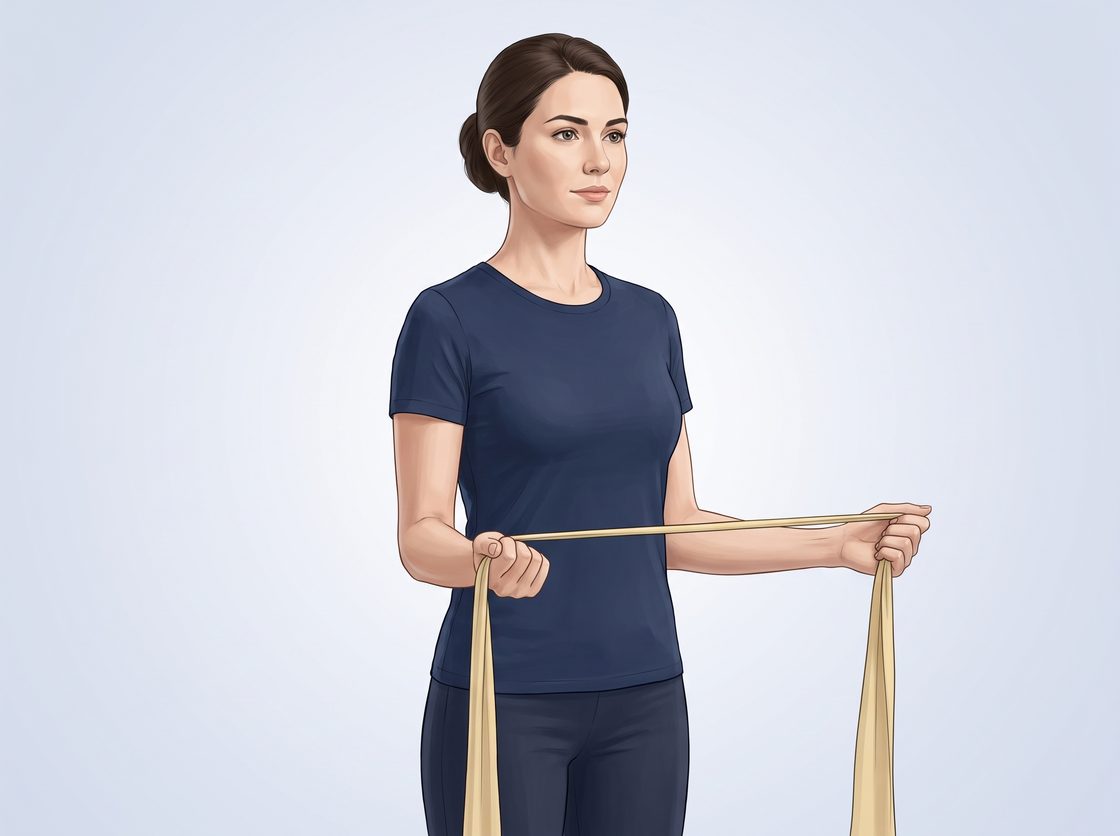
- Strengthen the rotator cuff and shoulder blade muscles, for example with resistance-band outward turns and rows.
- Build up overhead work, lifting and racket sports gradually, especially after a break.
- Warm up your shoulders before sport or heavy work.
- Keep heavy items between waist and chest height where possible, and hold loads close to the body.
- Take breaks from long periods of work with your arms raised or reaching forward.
- Set up your desk so your elbows rest by your sides and the keyboard and mouse are within easy reach.
When to seek medical attention promptly
Seek medical attention promptly if any of the following apply:
- A fall or injury followed by being unable to lift the arm, or a shoulder that looks out of place
- Chest pain, breathlessness or sweating with shoulder or arm pain: call 999
- A hot, red, swollen shoulder, or a fever
- Numbness, tingling or weakness spreading down the arm
- Unexplained weight loss, a history of cancer, or constant pain that is worse at night
- Severe pain that stops you moving the arm at all
The rotator cuff is a group of four muscles and their tendons that wrap around the top of the upper arm bone. They keep the ball of the shoulder centred in its socket and help lift and turn the arm. Most shoulder pain in adults involves these tendons.
Impingement describes pain from the rotator cuff tendons and bursa in the space beneath the bony tip of the shoulder when the arm is raised. Today it is usually understood as a tendon that is irritated or overloaded rather than simply pinched, which is why exercise is the main treatment.
With rotator cuff pain, the shoulder hurts but usually still moves fully when someone else lifts your arm. With frozen shoulder, the joint becomes stiff in every direction, even when someone else tries to move it. An examination can usually tell them apart.
Avoid the movements that clearly flare the pain for a while, but keep using the arm for everyday tasks. Complete rest can weaken the tendons and muscles, which tends to slow recovery.
Lying on the painful shoulder squeezes the irritated tendons and bursa, and pain often feels worse when you are still. Lying on the other side, or on your back with a pillow supporting the arm, may help.
That depends on your policy terms. Cover for outpatient care, imaging, surgery and chiropractic treatment varies between policies, so check with your insurer before your visit. We are happy to provide receipts to support your claim.
Disclaimer
This page is general information only, not a diagnosis or treatment advice. If you have any symptoms, please consult a qualified healthcare professional.
Further reading
These public health pages cover the same condition in more depth.
- NHS: Shoulder pain


Book a consultation with Dr. Ho, or message us on WhatsApp with any questions first.