Condition
A rounded hump at the base of the neck, often with neck and upper back stiffness.
We’re closed right now. WhatsApp us and we’ll reply when we open.

- Registered Chiropractor 註冊脊醫
- Doctor of Chiropractic D’Youville College, USA
- Whampoa & Hung Hom Near Whampoa MTR
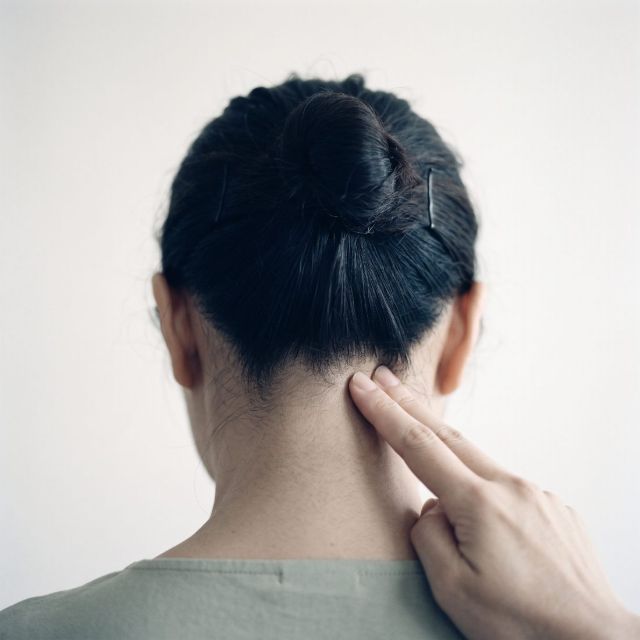
A dowager’s hump is a rounded bump at the base of the back of the neck, where the neck meets the upper back. It is usually a combination of posture, with the head held forward and the upper back rounded, and a pad of soft tissue that builds up over the bones at the base of the neck. It often comes with neck and upper back stiffness and tired shoulders, especially in people who spend long hours at a desk or on their phone. Posture habits and exercises may help with the stiffness and how you hold yourself, although the soft tissue itself may change little; a curve that develops quickly or comes with back pain should be checked, as it can occasionally come from weakened bones.
Key points
- A dowager’s hump is usually a mix of forward-head posture, a rounded upper back and a soft-tissue pad at the base of the neck.
- It is often linked to long hours looking down at screens, and may come with neck and upper back stiffness or headaches.
- Exercises, posture habits and hands-on care may help with stiffness and posture; the soft-tissue pad itself may not change much.
- A curve that appears quickly, back pain after a minor fall, or loss of height, especially after 50, needs a medical check for weakened bones (osteoporosis).
At the base of the neck, the seventh neck vertebra (C7) forms a bony bump you can usually feel. When the head is held forward of the shoulders for long periods, the neck and upper back adapt: the upper back rounds forward, and the area over C7 and the first vertebrae of the upper back becomes more prominent.
Over time, a pad of soft tissue, often including fat, can build up over this area and make the hump look larger. A dowager’s hump is not a medical diagnosis in itself, and it is not usually harmful. In older adults, however, marked rounding of the upper back can be caused by small fractures in bones weakened by osteoporosis, which needs medical care.
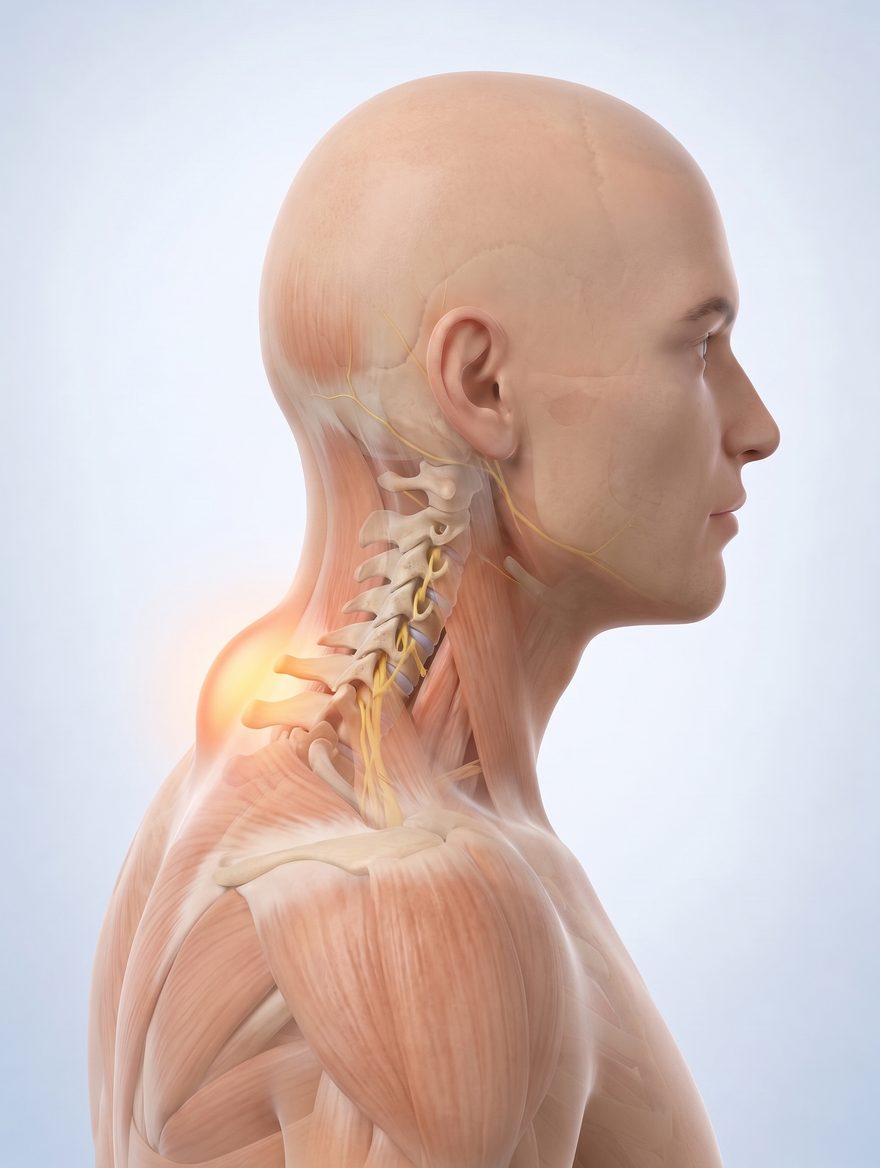
It usually develops gradually over months or years. Many people first notice it in a photo, or when touching the back of their neck.
Common signs and symptoms
- A rounded bump at the base of the back of the neck, at the top of the upper back
- The head sitting forward of the shoulders, with rounded shoulders
- Neck and upper back stiffness or aching, often worse after long periods at a screen
- Tight muscles at the top of the shoulders and between the shoulder blades
- Headaches that start at the base of the skull
How it develops
It usually develops in these stages:
- EarlyThe head drifts forward and the shoulders round when you sit for long periods, but you can still sit up straight easily.
- MiddleThe forward posture becomes your usual position, with stiffness at the base of the neck and a visible bump.
- LateThe upper back is stiffer and harder to straighten, and the soft-tissue pad is more noticeable.
Posture changes are common and are not, on their own, a sign of damage. How your neck and back feel and move matters more than how the curve looks.
It usually develops from long-term posture habits, although age, weight and bone health also play a part.
- Long hours looking down at a phone, tablet or laptop
- Desk work with a screen set too low, or sitting slumped without back support
- Weak upper back and deep neck muscles, and tight chest muscles
- Weight gain, which can add to the soft-tissue pad
- Osteoporosis, which can cause small fractures in the vertebrae and a more rounded upper back, mainly in older adults
- Some medical conditions and long-term steroid medication, which can increase fat over the upper back
Some biomechanical models suggest that tipping the head forward to look at a phone can increase the load on the neck several times over.
These simple checks can show whether posture is part of the picture, but they can’t tell you the cause. Stop if either causes pain.
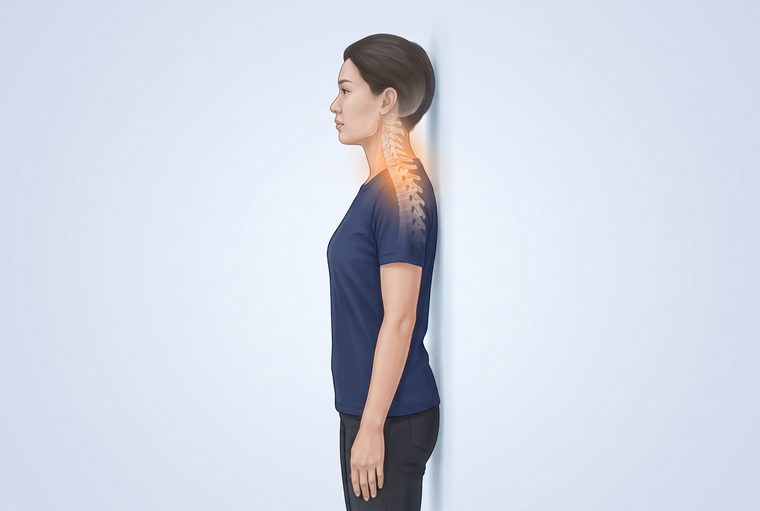
Wall test
Stand with your heels, buttocks and shoulder blades against a wall. Without tipping your chin up, try to touch the back of your head to the wall. If your head can’t reach the wall comfortably, forward-head posture and a stiff upper back may be contributing.
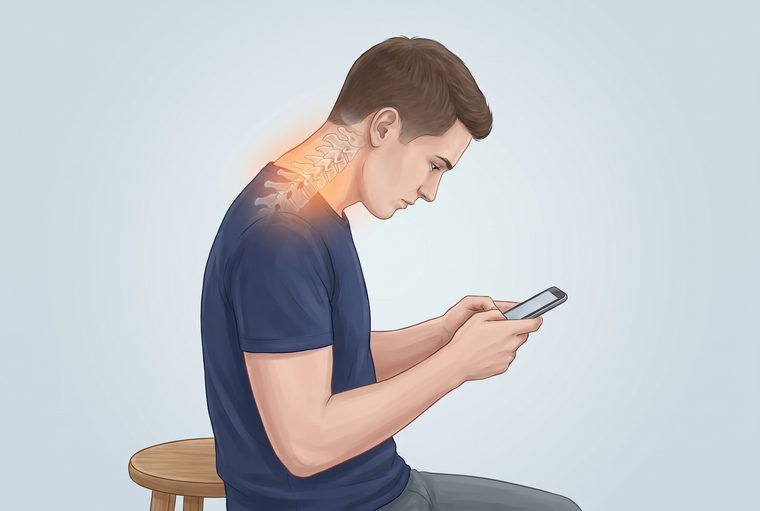
Side-on photo check
Ask someone to take a photo of you from the side while you stand or sit as you usually do, for example while using your phone. Normally the ear sits roughly above the shoulder. If your ear is well in front of your shoulder and your upper back looks rounded, posture is likely to be part of the picture.
These checks only show posture. Have it assessed if the hump is growing quickly, is painful, or comes with numbness or weakness in the arms.
A rounded upper back or a bump at the base of the neck has several possible causes, and some need medical care.
Postural dowager’s hump
- Where it usually shows
- The base of the neck and the top of the upper back
- Other clues
- Develops gradually with forward-head posture; you can partly straighten up when you try; often comes with stiffness
Osteoporotic kyphosis
- Where it usually shows
- The upper and middle back
- Other clues
- Mainly after 50 or after menopause; loss of height; back pain after a minor fall, lifting or even a cough
Scheuermann’s kyphosis
- Where it usually shows
- The middle or upper back
- Other clues
- Starts in the teenage years; a sharp, fixed curve that doesn’t straighten when you try
A fat pad from a medical condition
- Where it usually shows
- Over the base of the neck and upper back
- Other clues
- Comes with other changes such as weight gain around the face and trunk, thin skin or easy bruising; can be linked to long-term steroid use or hormone conditions
Neck stiffness and headaches can also come from the neck joints themselves. Dr. Ho assesses the neck, upper back, shoulders and your posture together, and will refer you for tests if a bone or medical cause is possible.
Further reading: Neck pain, Posture analysis, Scoliosis.
Assessment is based mainly on your history and an examination of your posture and spine.
Your history: How long you have noticed it, your work and screen habits, and any pain, loss of height or medical conditions.
Physical examination: Assessing your posture from the side and back, how your neck and upper back move, muscle tightness and strength, and checking the nerves in your arms if needed.
Further tests: If a bone problem such as osteoporosis or a fracture is possible, or the curve is marked or getting worse, Dr. Ho may suggest an X-ray or a bone density scan, or refer you to a doctor.
Treatment aims to ease stiffness and discomfort, improve how you hold your head and upper back, and build habits that reduce the load on your neck. Results vary from person to person, and posture changes take time.
Non-surgical options
- Changing screen and sitting habits: Raising your screen to eye level, holding your phone higher, and breaking up long periods of sitting.
- Posture analysis: A structured assessment of your posture and spinal alignment, to help identify what may be contributing.
- Strengthening and stretching exercises: Exercises for the deep neck and upper back muscles, such as chin tucks and rows, and stretches for the chest. Exercise is a core part of improving posture.
- Spinal adjustments and mobilisation: Hands-on treatment for stiff joints in the neck and upper back may help ease stiffness and improve movement.
- Soft tissue treatment: Easing tight muscles at the top of the shoulders and between the shoulder blades may help with discomfort in the short term.
Medical care
- Bone health: If osteoporosis is found, a doctor may recommend medication, calcium and vitamin D, and exercise to help protect the bones.
Cosmetic procedures
- Reducing the fat pad: Some people have the soft-tissue pad reduced with procedures such as liposuction, carried out by a doctor. These don’t change posture, and the pad may return if posture habits stay the same.

Dr. Ho first assesses your posture and spine and checks for any bone or medical cause, then plans treatment based on the findings. General information only — your plan is set after an in-person assessment.
- 01
Assess
A posture and spinal assessment of the neck, upper back and shoulders, checking for signs that a bone or medical cause needs ruling out.
- 02
Treat
Spinal adjustments and mobilisation for stiff joints in the neck and upper back, with soft tissue treatment for tight muscles.
- 03
Exercise and habits
A programme of deep neck and upper back strengthening and chest stretches, with advice on your workstation and phone use.
- 04
Refer
If osteoporosis, a fracture or a medical cause is possible, you will be referred for imaging, a bone density scan or to a doctor.
Small, regular changes to how you sit and use screens matter more than holding a perfect posture.
- Raise your laptop or monitor so the top of the screen is at eye level, and use a separate keyboard and mouse.
- Hold your phone closer to eye level, and take regular breaks from looking down.
- Change position at least every 30 to 60 minutes: stand up, roll your shoulders and look up.
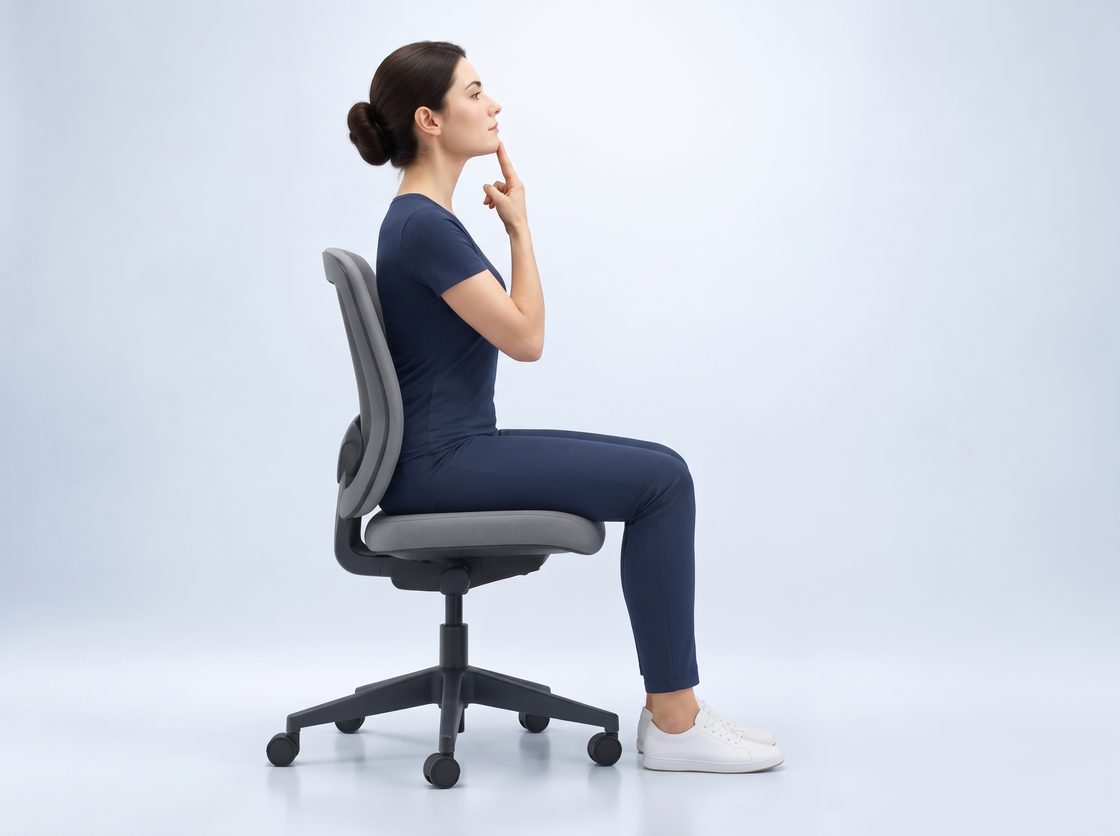
- Practise chin tucks: gently draw your chin straight back, hold for a few seconds, and repeat several times a day.
- Strengthen your upper back with exercises such as rows, and stretch your chest muscles.
- Use a pillow that keeps your neck in line with your body when you sleep.
- After 50, ask your doctor about bone health, and stay active with weight-bearing exercise.
When to seek medical attention promptly
Seek medical attention promptly if any of the following apply:
- A curve or hump that appears or worsens quickly
- Sudden back pain after a minor fall, lifting or coughing, especially after 50
- Loss of height
- Numbness, tingling or weakness in the arms or legs
- Unexplained weight loss, fever or pain at night
The posture part may improve with exercises, hands-on care and better screen habits, and stiffness and discomfort often ease. The soft-tissue pad itself may change little, and how much the hump changes varies from person to person. Bone changes from osteoporosis don’t reverse with exercise.
Usually not. A postural hump is mainly a matter of comfort and appearance. However, a curve that develops quickly, back pain after a minor fall, or loss of height can be signs of osteoporosis and should be checked by a doctor.
Long hours looking down at a phone or laptop are thought to be one of the main contributors, because the neck and upper back adapt to the forward head position. Age, weight and bone health also play a part.
Stiffness and discomfort may ease within a few weeks of regular exercise and changes to your habits. Changes in posture usually take longer, often several months, and depend on keeping up the exercises.
Massage and soft tissue treatment may ease tight, aching muscles around the hump, but on their own they don’t remove the soft-tissue pad. Exercise and posture habits are usually needed for lasting change.
They are related but not the same. A hunched or rounded upper back describes the whole upper spine curving forward, often with rounded shoulders. A dowager’s hump is a local bump where the neck meets the upper back, and it often appears together with a hunched upper back and a forward head position. Both may improve with exercise and better posture habits, but a curve that increases quickly should be checked by a doctor.
That depends on your policy terms. Cover for outpatient care, imaging and chiropractic treatment varies between policies, so check with your insurer before your visit. We are happy to provide receipts to support your claim.
Disclaimer
This page is general information only, not a diagnosis or treatment advice. If you have any symptoms, please consult a qualified healthcare professional.


Book a consultation with Dr. Ho, or message us on WhatsApp with any questions first.